Spayed Cat: How to Adjust Food Portions
Spaying alters a cat's metabolism and eating behavior, requiring adjustments in portion sizes. An expert recommends control, wet food, and veterinary monitoring to prevent weight gain.

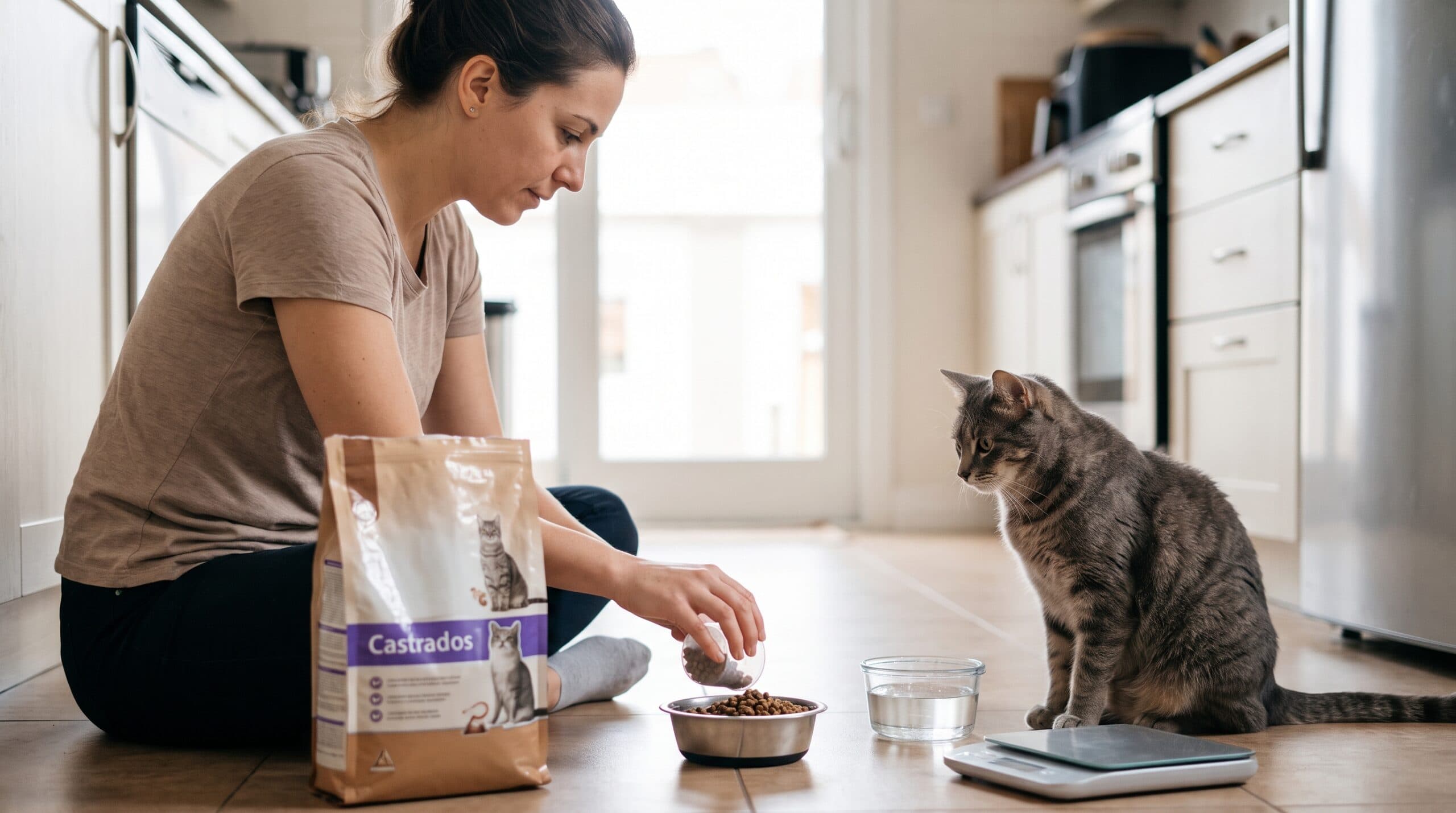
Castration protects the cat from diseases of the reproductive system and reduces behaviors linked to heat. After surgery, however, the animal's routine changes, and with it the energy he spends and the relationship he has with food. It is at this point that the feeding of neutered cats requires more attention from the tutor.
This does not mean that every neutered cat will get fat. It means that each animal needs a feeding plan adjusted to its case, with controlled portions and close monitoring. See how to do this in practice.
Changes in metabolism and behavior
After castration, the cat’s energy needs and feeding behavior may change. Some animals start to ask for more food, others become less active, and there are still those that follow exactly as before. There is no single rule that applies to everyone.
Cats castrated between 7 and 12 months gained weight more slowly than cats castrated up to 6 months. Even so, the researchers conclude that guidance on weight control after castration applies to all cats, with combined monitoring of balance and body condition.
In addition to the amount served
For the doctor-veterinary Jéssica Yoshida, coordinator of the area of Credibility of Mars Pet Nutrition Brazil, the attention needs to go beyond the quantity served: "Cats usually drink little water on their own. Including damp foods in the routine helps increase fluid intake, and by having more water and volume, these foods also contribute to the feeling of satiety.”
An alternative is to combine dry and wet options throughout the day, always considering the total amount offered. If the cat receives sachets, the portion of dry feed needs to be reduced in the same proportion, so that the sum of the meals does not exceed what he really needs.
Simple Attitudes to Maintain Health
A few simple attitudes help keep the neutered cat healthy:
Control the portions: offer the appropriate amount to the individual needs of the cat and follow the body condition, which avoids excesses and facilitates adjustments.
Observe the body, not just the scale: changes in body shape or continuous weight gain are signs to seek out the veterinarian.
Stimulate movement: Play, toys, scratchers, shelves and other forms of environmental enrichment keep the cat physically and mentally active.
Encourage water intake: Spread pots with fresh water at different points in the house, use fountains, and include damp foods on the menu.
Do veterinary follow-up: the professional evaluation allows you to track weight, body condition and nutritional needs, as well as identify changes early.
When to seek the veterinarian
Continuous weight gain, change in body shape or change in appetite are reasons to make an appointment. The professional evaluates the body condition, calculates the appropriate amount of food and indicates the type of feed most suitable for your cat.
The earlier the adjustment is made, the simpler it is usually to keep the weight within a healthy range. Periodic returns help to correct the route whenever the routine or age of the animal changes.
For more tips on pet care, continue browsing the Boca no Trombone Portal.
Read Also
Does the dog feel the stress of the tutor? Science Explains
15 Dog Breeds Ideal for Apartment
Font
www.portaldodog.com
Portal Pet On (portalpeton.com.br)