Children's Day Much More Than Crazy Hair
The lessons behind themed days, which seem like just play, but teach belonging, creativity and coexistence.

October is marked by Children’s Day, a date that takes care of the routine of families with children under 12. Parents roam shops behind the ideal toy, schools do thematic activities and trade expects to move 9.2 billion with the date in 2026, according to the National Confederation of Trade in Goods, Services and Tourism (CNC).
The expectation of the little ones is great, but it is in the classroom that the date takes on a different meaning. Teachers prepare gymnastics, picnics, costumes and runners gain colors. At first glance, everything seems to be fun. But the party hides learnings that accompany the child for a lifetime.
Science confirms it. A report from the American Academy of Pediatrics (AAP), published in 2018 in the scientific journal Pediatrics, concluded that playing with parents and peers develops habilidades sociais, emotionally, cognitively and language. The document also points to gains in the ability to collaborate and innovate, in addition to reducing stress.
According to pediatricians, play helps form the brain and strengthens executive function, a name given to the set of skills that allows you to plan, maintain focus and solve problems. Therefore, if for students, the celebrations are pure party, for educators, each proposal has a didactic objective.
In Curitiba, the Escola Willy Janz shows how this works in practice. From October 14 to 16, the institution promotes Children’s Week 2026 with three thematic days: Color Picnic on Wednesday, Half Crazy and Crazy Hair on Thursday and 80s Day on Friday.
Picnic of Colors: the value of dividing
The first day takes the classes to a collective snack with fruits of various shades. Apple and watermelon represent the red, the sleeve brings the yellow, the kiwi gets the green and the blueberry with the blue.
“Sitting on a wheel and sharing food is an exercise in socializing, that is, learning to live in a group. The child waits for the turn, offers, accepts and discovers that the table is fuller when everyone participates”, explains Karlene Moreira dos Santos, coordinator of the Elementary School of Escola Willy Janz.
She says there is also a gain in food. In a mood of joke, tasting an unknown taste is no longer a must and becomes curiosity. When broken, the little ones work colors, textures and tastes without realizing that they are studying.
Half Crazy and Crazy Hair: freedom to create
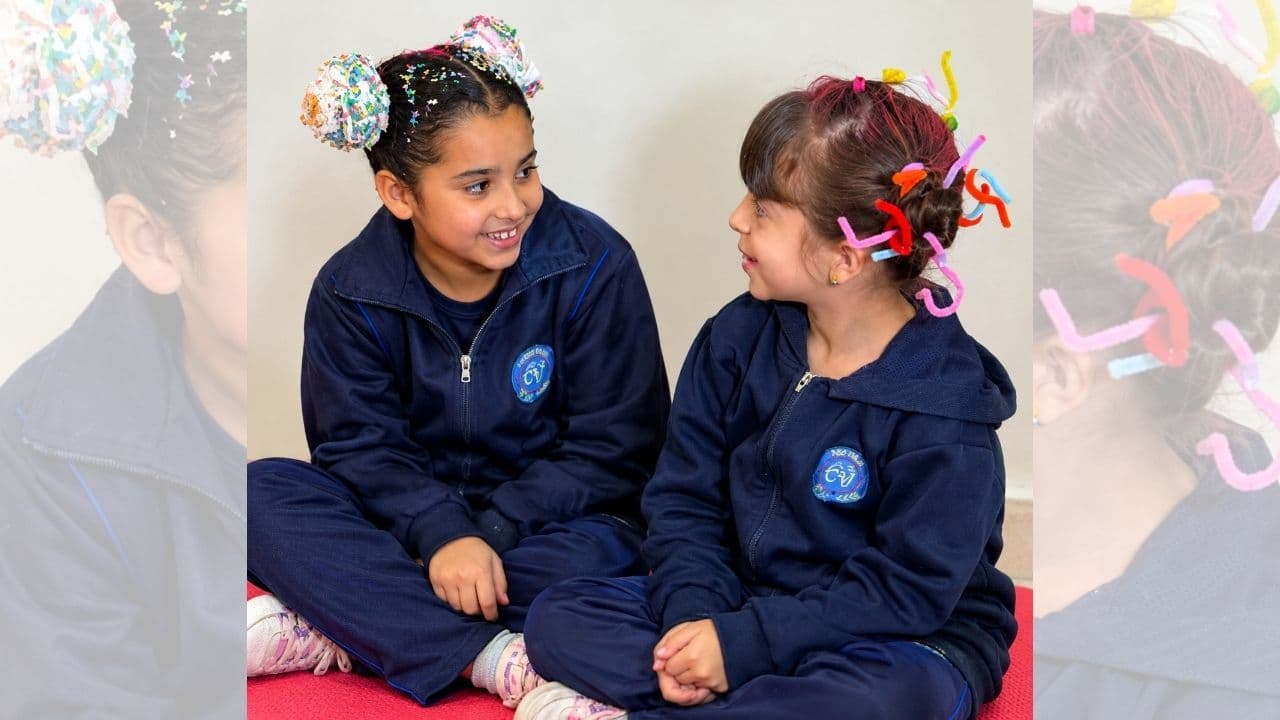
On the second day of the theme week, the focus is on creativity. It is worth colorful braid, embellishment on the head and a different stocking from the other. There is no right or wrong, and that is precisely the lesson.
“It goes far beyond the visual. Between one invention and another, children also learn a lot. In Crazy Hair, we work on socialization, respect for differences, colors and shapes,” explains Karlene.
The pedagogue says that creativity comes on the scene from the day before, when the student plans the look at home, often with the help of the family. He imagines, tests, changes his mind and solves practical problems, such as making a hairstyle stand upright. There is also a learning about belonging, which is the feeling of being part of it. “When everyone gets out of the way, being different stops causing shame. Each expresses himself in his own way and, at the same time, recognizes himself in the group.”
The program also includes a parade, a moment that leaves the class excited. “We have a parade for them to look at the props, the different textures, the colors and the sizes, which one is bigger and which one is smaller. Within a legal and different day, we worked together on various things of the disciplines,” adds the coordinator.
Day of the 80s: a joke that unites generations
The week ends with a journey in time. Colorful jackets, leggings, jeans and the sound of the tape recorder present students with a time that they only know from the stories of adults.
“In order to put on the costume, you have to ask. How did the parents dress? What did you hear? What were you playing at the playground? This conversation brings grandparents, parents and children together and shows that family is also part of school life,” says Karlene.
Playing is serious
Play is a right provided by law. The Statute of Children and Adolescents (ECA) includes playing, playing sports and having fun among the guarantees of childhood freedom. The Base Nacional Comum Curricular (BNCC), a document that guides teaching in Brazilian schools, places play as one of the six learning rights of Educação Infantil.
It's not a coincidence. This is how children learn to follow rules, deal with the frustration of losing, control impulses and put themselves in the place of the other. They are skills that will be used in the classroom, at work and in relationships for the rest of your life.
With 34 years of history, Escola Willy Janz works with vocational development and treats these dates as part of the pedagogical project, not as a pause in it. For school, the discovery of vocation begins when the child has room to know himself, discover new possibilities and explore creativity.
The principal of the school, André Ceruzi, sends a message to parents: “Let your children play. With free time, with a mess, with socks changed and hair standing. Those who play today tend to become a more functional, healthier and more prepared adult to live together.”
Read also: Dollar opens at R$ 5.06 this Thursday; market follows PEC of the 6×1 scale and electoral polls