Diver diverges to find lost wife in Japan tsunami
Yasuo Takamatsu dives twice a month in the sea of Onagawa, Japan, to search for his wife Yuko, who disappeared in the 2011 tsunami. He has already made over 760 dives and says the practice brings him closer to her.

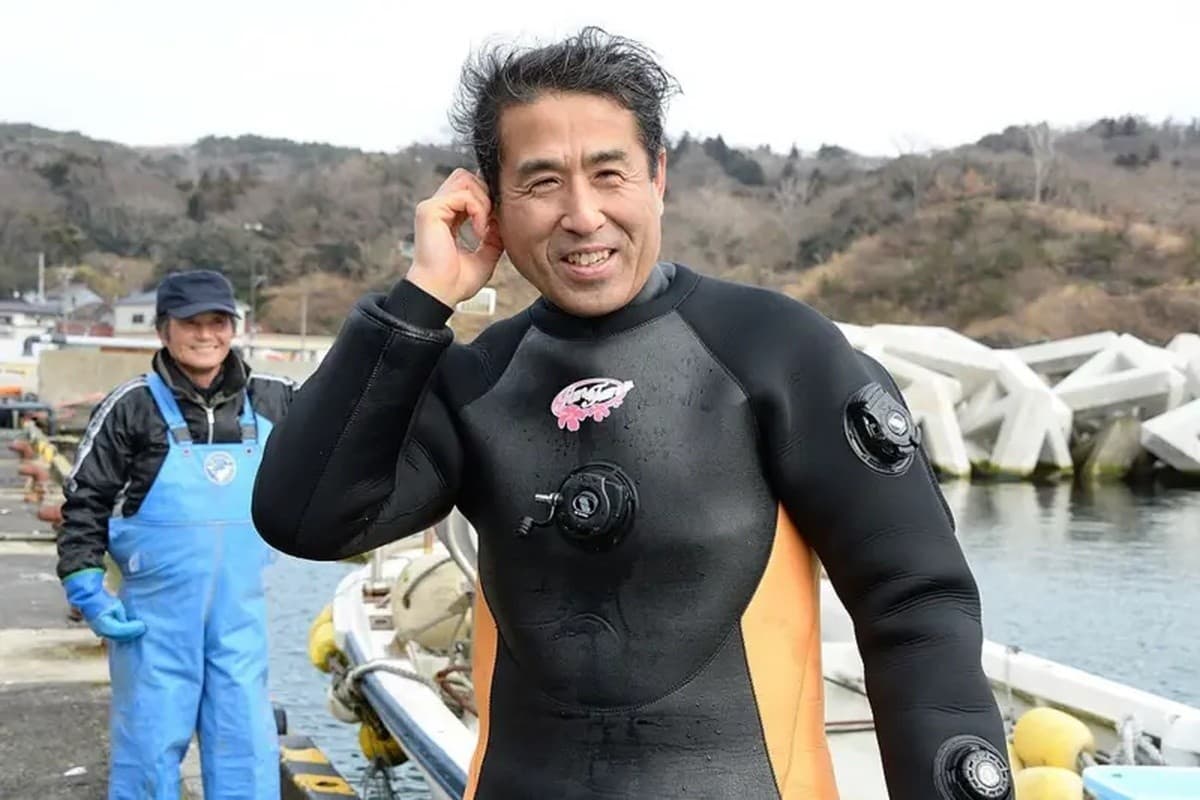
Twice a month, for more than 13 years, Yasuo Takamatsu boards a small fishing boat at the port of Onagawa in Miyagi province in northeastern Japan, and follows a few kilometers offshore. The routine is always the same: he puts on the diving mask, the air cylinder and the ballast belt. When the boat is already far from shore, Takamatsu plunges into the cold waters. With each dive, he returns to the same sea where he lost his wife, Yuko.
The day the sea took Yuko
Yuko was dragged by water from the roof of the bank where she worked when the 2011 tsunami hit the northeast coast of Japan and destroyed everything along the way. The gigantic wave advanced almost 10 km inland. That morning, Takamatsu had left Yuko at work. During the short drive, the two talked about what they would do for dinner.
When the tsunami warning sirens began to sound, Yuko and 12 colleagues climbed onto the roof of the building. From there, she sent a message to her husband: "Are you okay? I want to go home." Upon reading the message, Takamatsu believed that Yuko was safe. But the next day, when she managed to get to the municipal hospital where the survivors were being taken in, she found out she was not there.
Untiring pursuit and learning to dive
In the days and weeks that followed, as the waters retreated, thousands of bodies were found along the coast of Japan. But many victims, including Yuko, remained missing. For two years, Takamatsu accompanied Japanese Coast Guard divers in searching for bodies, personal items and memories carried by the tsunami.
"I learned to dive. I felt that if I kept diving, one day I could find her,” Takamatsu says. He never stopped diving. He has made more than 760 dives since the end of his 50 years and over his 60 years.
Kuyō: when there is no tomb to visit
In the Buddhist tradition, the practice known as Kuyō includes rituals such as making offerings and praying before a tomb or altar, with the aim of providing peace and well-being to loved ones who have died. But since Yuko's remains were never found, Takamatsu could not pay this kind of homage in front of a tomb.
“After diving so many times, I started to feel like she might be around,” says Takamatsu. “It’s a little different than visiting a grave, because she’s not in one. For me, it’s more like going to meet her.”
Pain and longing in the depths
When he dives into deep waters and sees the ravages left by years of natural disasters, Takamatsu feels sadness. "When I look at the wreckage, I think, 'She wouldn't have been able to get back to the surface in the middle of it.' And when I think about it, I feel like I could cry.”
Takamatsu's story is a portrait of prolonged mourning and the search for connection after a traumatic loss. The source did not detail whether he found any of Yuko's personal items during the dives. The case also illustrates the lasting impact of the 2011 tsunami that left thousands missing in Japan.
For readers of the Boca no Trombone Portal, Takamatsu’s trajectory serves as a reminder of human resilience in the face of tragedy. As he continues to dive, Yuko's memory remains alive in the waters of Onagawa. Follow other international and local stories on our portal.
Read Also
Pope Leo XIV to undergo surgery to remove lump in lung
Reform expands Putin's residence in the Black Sea
Susan Dell becomes target of alien theories after event
Font
g1.globo.com
tsunami (www.bbc.com)