Indigenous Peoples' Entrance Exam in Paraná Starts on Sunday
Exams for the Indigenous Peoples' Entrance Exam begin on Sunday (14) in eight poles in Paraná. There are 52 spots available at state and federal universities.

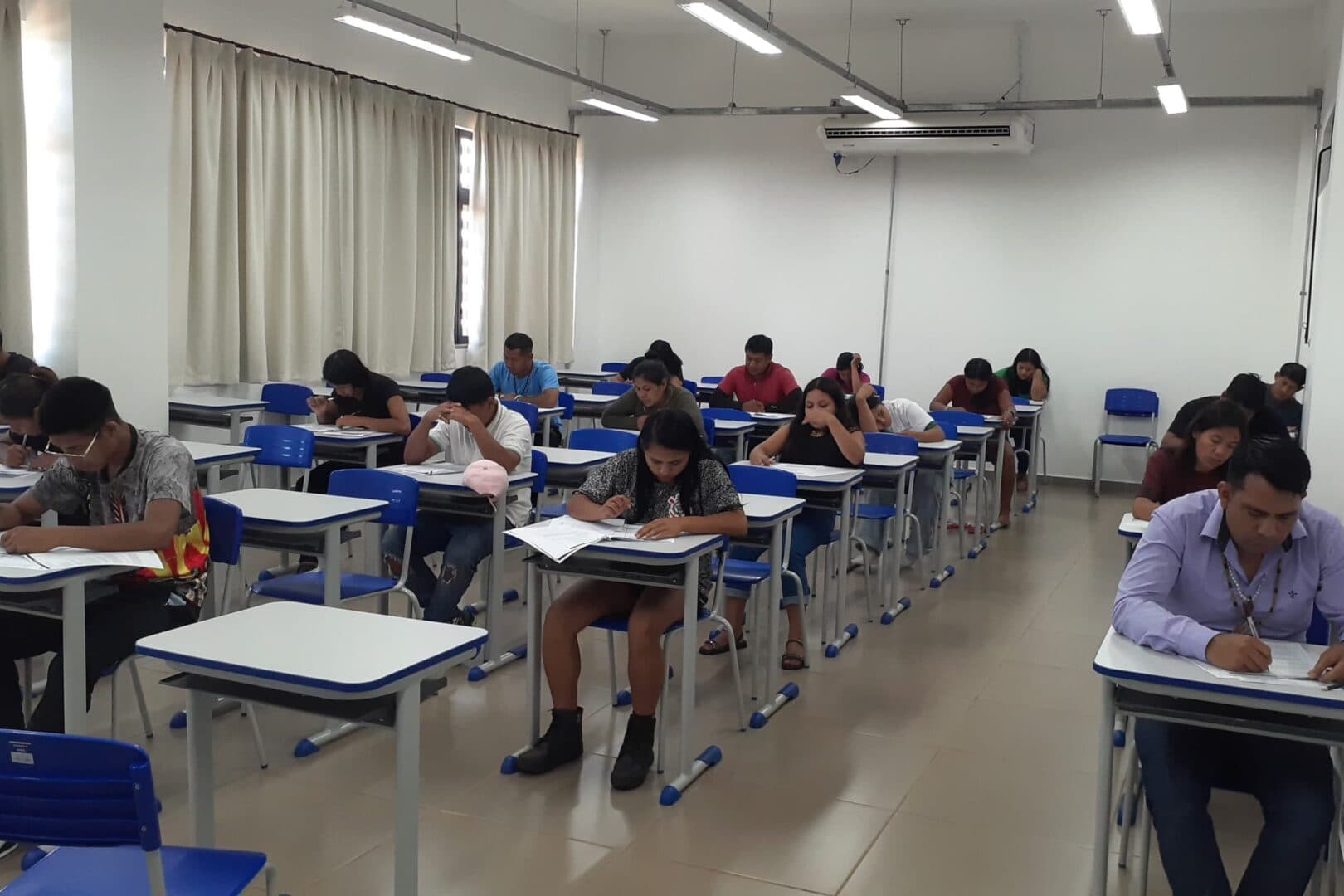
The 25th Vestibular of the Indigenous Peoples of the Paraná will begin on Sunday (14) with the oral exam, followed on Monday (15) with the written evaluations of General Knowledge and Writing. The tests will be applied in eight poles distributed by the State, guaranteeing access to candidates from several indigenous communities, including the Campos Gerais region. The selection process is one of the main gateways to public higher education for Kaingang, Guarani and Xetá students.
Vacancies at state and federal universities
In total, the entrance exam offers 52 places for undergraduate courses at eight public universities. Of the opportunities, 42 are for the seven state universities — EMU, UEL, UEPG, Unioeste, UENP, Unicentro and Unespar — and another 10 are reserved for the Federal University of Paraná (UFPR). The presence of UEPG (Ponta Grossa State University) is especially important for the Campos Gerais region, which has an expressive indigenous population.
Inclusion and affirmative policies
According to Professor Maria Christine Berdusco Menezes, coordinator of the University Commission for the Indians (Cuia), the entrance exam is the result of a consolidated public policy, supported by laws 13.134/2001 and 14.995/2006, which ensure six places in each state university for indigenous candidates. “With the specific entrance exams, the Paraná stands out in affirmative policies, ensuring inclusion and access to public higher education,” he said.
Support for student permanence
The EMU, responsible for the coordination of this year’s entrance exam, is a reference in the training of indigenous students. The institution has graduated 50 students and currently maintains 81 enrolled, even though it is located far from the main indigenous lands of the State. Support programs such as Proindi and the Individual Plan for the Follow-up of Indigenous Students (PIAEI) offer permanent assistance, monitoring, psychosocial support and pedagogical workshops. The university also maintains an exclusive room in the Central Library for indigenous students, reinforcing the reception policy.
Diversity of courses and opportunities
Approved candidates will be able to pursue degrees in areas such as Administration, Agronomy, Law, Physical Education, Nursing, History, Letters, Medicine, Pedagogy, Social Service, among others. There are also options in the EaD modality, including Biological Sciences and Pedagogy, which facilitates access for students living in distant communities.
The final result of the selection process will be published on October 10 on the vestibular.uem.br/indigena website. The expectation is another important step to ensure that indigenous peoples of Paraná and cities such as Ponta Grossa, Reserva and Tibagi have higher education opportunities and return to their communities with knowledge to promote social and cultural development.
With supervision of Marcos Silva