PG 203 anos: Sagrada Família, a story of faith, education and commitment to Ponta Grossa
Sagrada Família in Ponta Grossa brings together 93 years of history, education, human formation and teaching from maternal to graduate and postgraduate levels

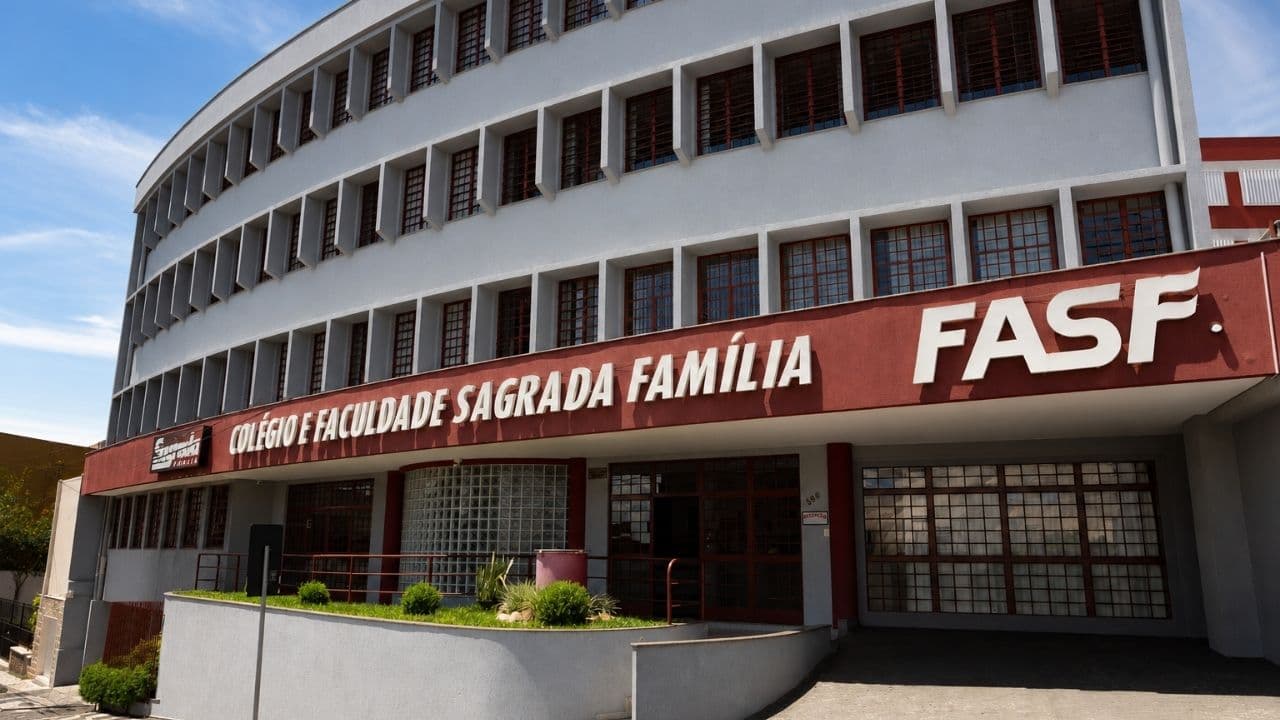
Since the arrival of the first Irmãs Franciscanas in 1933, an educational mission has grown with Ponta Grossa and contributes to the formation of different generations.
Irmã Edites Bet - Director of the Sagrada Família College and College
1933 - The beginning of the educational mission of the Irmãs Franciscanas of the Holy Family of Mary in Ponta Grossa.
A mission that arrived on the tracks
The history of the Sagrada Família is directly related to the development of Ponta Grossa. On February 11, 1933, the Irmãs Franciscanas of the Holy Family of Mary, Melania, Joanina and Boeslava, arrived in the city with the purpose of starting an educational work.
At that time, Ponta Grossa was undergoing an important growth process. The railway activity favoured the movement of people and goods, boosted trade and contributed to the formation of a population composed of families of different origins, including numerous Polish immigrants.
It was in this environment that the three nuns, initially counting on a modest structure, started a proposal of education based on knowledge, human formation and Christian values.
Initially, care was more linked to families of Polish origin and, progressively, it was extended to children and young people from all over the Ponta Grossa community. The institution then began to permanently integrate the educational trajectory of the city.
Since its origin, the proposal of the Sagrada Familia has understood education as a process that goes beyond the transmission of contents. Intellectual development has been associated with responsibility, discipline, spirituality, coexistence and commitment to society.
This concept is summarized in the motto “Educating is building”. The phrase expresses the understanding that education contributes to form people, strengthen communities and prepare new generations to participate in the social, educational and cultural development of the city.
In this way, it began a new work that would grow together with Ponta Grossa and become part of the history of thousands of students and families.
Growth together with Ponta Grossa
The first facilities operated in a small wooden house, in the area of Airton Plaisant Commander Street, with two classrooms and simple outbuildings. With the growth of the institution, the Sagrada Familia moved to the Avenida Visconde de Taunay, where its structure was being enlarged and modernized to accompany the new educational needs and the development of the city.
While Ponta Grossa consolidated itself as an important economic, cultural, industrial and educational center of Campos Gerais, the Sagrada Familia also expanded its performance. New teaching stages were incorporated, buildings were built and different generations passed through their classrooms.
The institution became part of the memory of Ponta Grossa. Its trajectory is present in the experiences of religious women, students, teachers, collaborators and many families in the region. Over time, it has consolidated itself as a living, active and integrating College, which is expressed in celebrations, scientific, cultural, sports and social projects, graduations and meetings held throughout its history.
The return of former students as parents, professionals, educators, collaborators and partners, bringing with them memories and values lived in the Sagrada Família, demonstrates the continuity of this relationship. The bond created during the school period is maintained by trust, welcome, a sense of belonging and gratitude.
With the growth of the institution, its presence was expanded to four units distributed in different regions of the city. They all maintain the same mission, educational identity and human and Christian orientation.
From the Center unit, where the trajectory began, the institution extended its presence to the Uvaranas region, through the Auxiliary unit, to the Cará-Cará neighborhood, with the São Zygmunt unit, and to the Orphans region, with the São José unit.
The expansion of the units represents the strengthening of a single educational work in Ponta Grossa, because in all of them, the work is guided by the principles of scientific knowledge, human and Christian formation, family coexistence and social responsibility, following the legacy left by Saint Zygmunt Felinski, founder of the Congregation of the Irmãs Franciscanas of the Holy Family of Mary.
This work is maintained by the Family of Mary Association, an institution that continues the mission of the Irmãs Franciscanas of the Holy Family of Mary and keeps it alive through the commitment of religious, educators, collaborators, students, families and all those who participate in its daily construction, especially in the areas of education, human formation and social action.
From Maternal to Higher Education
Throughout its history, the Sagrada Família has accompanied students in virtually all stages of their formation.
The work begins in kindergarten and in Educação Infantil, continues through Elementary I and II and Ensino Médio, which also offers vocational training in Teaching, and reaches undergraduate, postgraduate and continuing education.
In July 2011, the creation of the Sagrada Família College — FASF marked a new stage in the institutional trajectory. Initially, the courses of Administration, Accounting, Pedagogy and Social Sciences were implemented, leading to higher education the educational tradition already consolidated by the College.
Subsequently, the Faculty incorporated the courses of Nursing, Physiotherapy, Technology Software Engineering in Agroindustry, in addition to offering postgraduate courses.
The presence of the Faculty broadened the participation of the institution in the commitment to the development of Ponta Grossa and Campos Gerais. The training of professionals in different areas contributes to meet the needs of companies, organizations, the public sector and communities in the region.
The vocational training offered by FASF seeks to articulate technical competence, ethics and social responsibility. The objective is to prepare people capable of acting in their areas of knowledge and, at the same time, to contribute consciously to the economic and human development of society.
The mission initiated by the first three sisters thus gained new dimensions. The work that began with the education of children and young people began to cover a formative trajectory that extends from childhood to higher education and continuing education.
A tradition that is renewed
Over more than nine decades of presence at Ponta Grossa, the history of the Sagrada Família was built by the dedication of managers, religious, educators, collaborators, students and families.
The mission started in 1933 remains present in the daily life of the institution. While preserving its fundamental values, the Sagrada Familia follows the changes of society and incorporates new ways of teaching, learning and contributing to the community.
During this period, Ponta Grossa expanded its population, developed its economic activity, and strengthened its regional position. Teaching methods have also evolved, new technologies have begun to integrate education and new demands have arisen in the training of children, young people and professionals.
Even in the face of these transformations, the institution maintained its commitment to an education based on knowledge, human and Christian values, responsibility and acceptance.
For the Sagrada Familia, innovation and tradition do not represent opposite paths. Innovation allows us to respond to the needs of the present, while tradition preserves the principles that give meaning and continuity to the educational mission.
Currently, the College and the Sagrada Família College are part of the educational history of the municipality and contribute to the formation of people at different stages of life. The activity in several regions of the city and the expansion of higher education demonstrate the permanence and the topicality of this mission.
Built by many hands and deeply linked to Ponta Grossa, this story brings together tradition, faith, education and social responsibility. A story that follows the progress of the city and remains focused on the future.
A story that continues.
Article from Colégio Sagrada Família for the book: "PONTA GROSSA: From the Route of the Tropeiros to the Tracks of Innovation"
Check out the other articles here!