Prepare for the landing of the next 30 years by Paulo Pinto
Ponta Grossa's infrastructure will be decisive in attracting companies, investments and ensuring the city's development in the coming years.


Ponta Grossa was born from an economy that chose where to stop for what it found: water, pasture, wintering, paths. As the text "From the tropeiro economy to the global economy" recalls, the city prospered because it offered conditions before the traveler arrived.
In the industrial age, the method was repeated, built in cycles, by several generations of leaders. In 1969, Mayor Cyro Martins instituted the PLADEI, the Industrial Development Plan, and acquired in 1971, from the Federal Railway Network, the area of the future Industrial District. Luiz Gonzaga Pinto, mayor since 1973, attracted the first large agribusinesses and resigned in 1975 to take over the Secretariat of Industry and Commerce of Paraná — from where he continued to support the District project, completed in 1976 in the management of Amadeu Puppi. Neither of the three cut the ribbon of the great factories that came after; the three prepared the ground for them.
The results dispense with adjectives. In the late 1970s, the city concentrated 40% of the country’s soybean crushing. In the following decades, it diversified: packaging, auto parts, food, wood, paper. Each venture brought jobs, technology and exports — all attracted by the same reasons: logistics, infrastructure and favorable environment. Today the municipality houses the largest industrial park in the interior of the Paraná, recorded the highest GDP growth among the main cities of the State in the most recent data from the IBGE and leads the Paraná exports in five segments.
The decisive question, however, is not what has already come; it is what has not yet decided to come. The modern investor is also looking for his "pouses". Its water and pasture are called, today, firm energy, industrial water, gas, sanitation, prepared land, fluid road and rail access, diversified airport, connectivity, housing, mobility, legal security and, above all, qualified people. Just as the entourages of the past chose where to stop, the capital chooses the cities where it finds conditions to grow.
Therefore, the only sustainable strategy is to keep infrastructure one step ahead of growth. A city cannot expect to run out of energy to expand its capacity; it cannot expect to run out of water to expand its supply; it cannot expect to saturate a highway to plan new accesses; it cannot expect to run out of gas to extend the network; it cannot wait for the airport to fall short of demand to diversify its services; it cannot expect to deplete the industrial area to start new land; it cannot expect to run out of labor to invest in qualifications; it cannot expect to arrive. Infrastructure should not follow development; it must come before it.
Half a century ago, mayors prepared ground for companies they didn’t know about. Today, in an echo that history has capriciously written, the ACIPG that designs the city of 2043 through the Masterplan is presided over by Leonardo Puppi Bernardi, grandson of Amadeu Puppi, and has as director of Industry Paulo Pinto, grandson of Luiz Gonzaga Pinto — who became municipal secretary of Industry and Commerce after five years in 2023. The grandchildren inherited more than the last names: they inherited a method that crosses generations and parties – the same that, in 1923, in the first year of the entity’s life, led its founders to plead the road to Guarapuava.
Now the question is ours. At this very moment, in some room we will never know, a company compares cities on a map — and what we decide today on energy, water, land and people formation will determine whether or not Ponta Grossa will be on that list in five, ten, twenty years. The future will not ask how many inaugurations we celebrate; it will ask how many we make possible. Thirty years from now, our children and grandchildren will look at this decade as we look at 1969: as the time when a generation laid the groundwork for their future — or as the time when it stopped preparing for it. The entourages of old did not stop where landing was lacking; neither did capital. That no one can say we didn't know. Let it be said that, knowing, we have chosen to prepare — with abundance, not at the limit — the landing of companies that have not yet decided to come.
Article by Paulo Barbosa Pinto for the book: "PONTA GROSSA: From the Route of the Tropeiros to the Paths of Innovation"
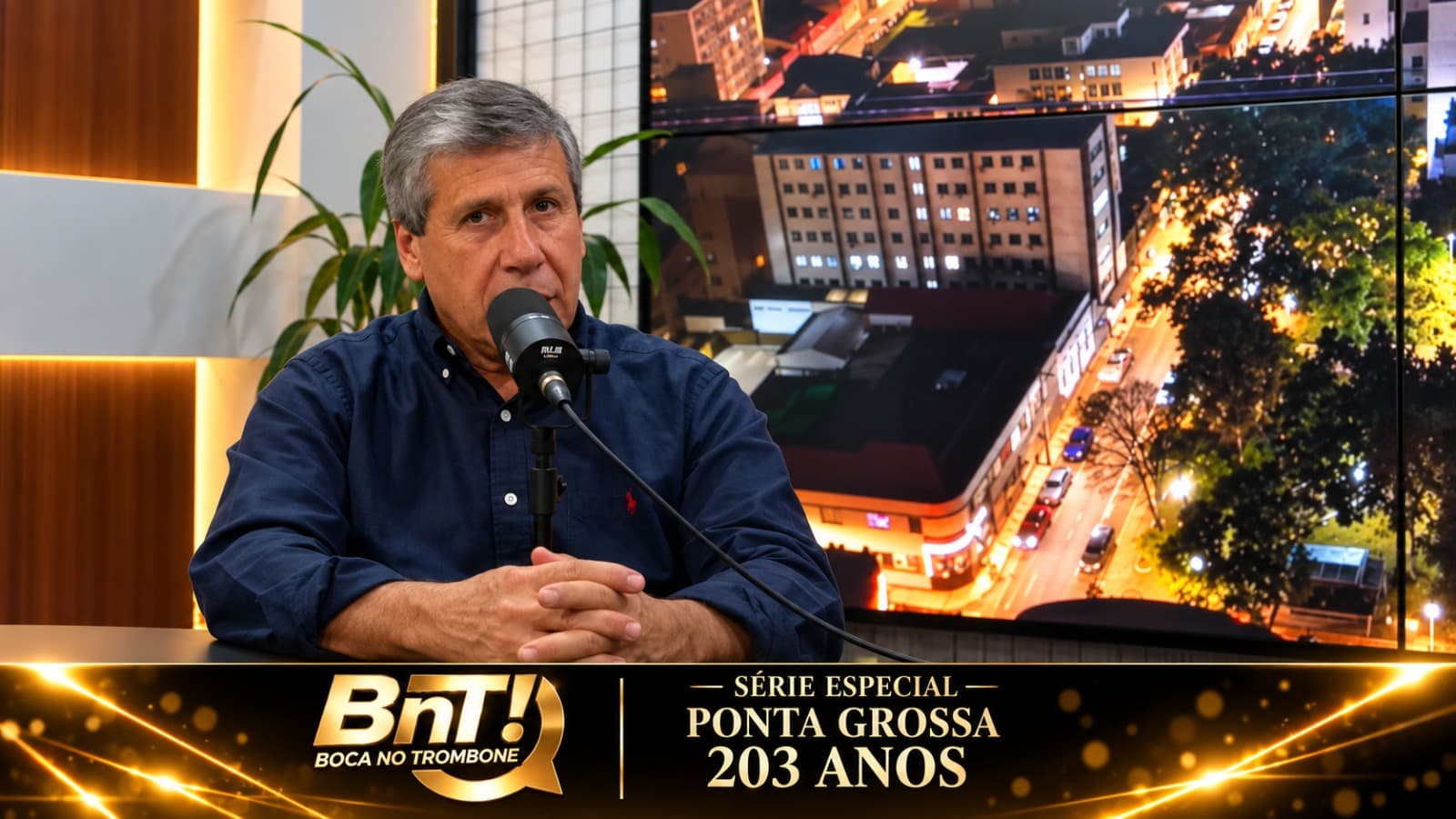
WATCH THE LIVE INTERVIEW: