Brazil may change the way it elects deputies and councilors; understand
Chamber discusses electoral reform that could change the voting for deputies and councilors starting from 2030. Understand the new rules.

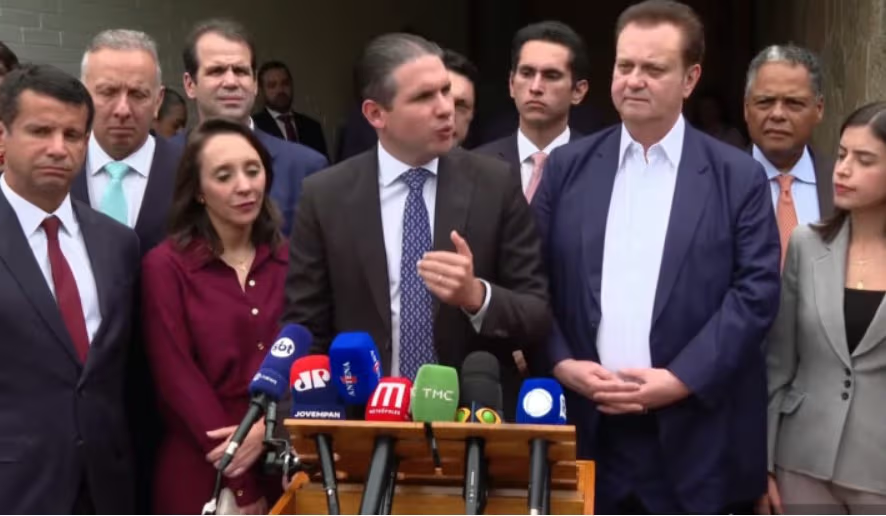
The Brazilian electoral system may undergo changes in the coming years. The president of the Chamber of Deputies, Hugo Motta (Republicans-PB), announced that he intends to vote, still in 2026, a proposal that changes the way Brazilians choose federal deputies, state deputies and councilors.
The main novelty is the possibility of implementing the so-called mixed district vote, a system that combines the choice of representatives of certain regions with voting in political parties.
According to the presented planning, the change would be introduced gradually, with a transition phase in the 2030 elections and full adoption of the new model expected by 2034.
The matter was discussed during a meeting between Motta and representatives of different political parties, held in Brasilia. The intention is to build an agreement that allows the analysis of the reform by Congresso Nacional.
How would the new voting system work?
Currently, the election of federal, state and council members uses the proportional system, in which the number of seats won by parties and federations depends on the votes received, considering the electoral rules in force.
With mixed district voting, the process would be different.
In this model, part of the representatives would be chosen directly by the voters of certain electoral districts. Another part of the vacancies would be filled considering the vote received by the parties.
In practice, the elector could participate in two choices: one directed at a candidate from his region and another related to party representation.
The division of the districts, the distribution of the seats and other details would still depend on the definition of the text of the reform.
For municipalities such as Ponta Grossa and other cities of Campos Gerais, the discussion also has importance, since a possible change could change the form of political representation in municipal, state and federal elections.
Hugo Motta seeks support from other parties
The first negotiations involved leaders of União Brasil, Progressives, PSD, Republicans, MDB, Podemos and the federation PSDB-Citizenship.
Now, the Presidency of the House intends to expand the talks with other acronyms, including PT, PV, PCdoB, PL and Novo.
The objective is to find points of agreement that allow to move forward with the proposal later this year.
Motta also intends to talk with the president of the Senate, Davi Alcolumbre (União-AP), to discuss the processing of the amendments in the two legislative Houses.
According to the mayor, the reform seeks to strengthen the relationship between voters and representatives, as well as to improve the functioning of the electoral system.
The possible changes, however, do not include the choice of president of the Republic, governors, mayors and senators, who follow rules of the majority system.
Election campaigns on social media may also have new relegations
Another issue that has entered the agenda of Congress is the regulation of political propaganda on the internet.
Hugo Motta announced the creation of a working group with representatives of all parties in the House to discuss changes to the Electoral Code related to digital platforms.
The proposal aims to establish more specific criteria for electoral advertising on social networks, complementing the norms that already exist for campaigns on radio, television and printed materials.
According to the mayor, the intention is to define transparent rules applicable to different candidates and parties, ensuring greater clarity on the functioning of electoral propaganda in the digital environment.
Motta said the goal is not to restrict freedom of expression, but to establish parameters known to all participants in the electoral contests.
When can the changes take effect?
Despite the intention to speed up the discussions, none of the announced changes are approved.
The proposal to implement the mixed district vote still needs to go through the necessary legislative process, including the analysis of the Chamber of Deputies and the Federal Senate.
If it advances in the terms presented, the new system will have a transitional stage in the 2030 elections and could be adopted in full in 2034.
Until then, Brazilians remain subject to the electoral rules currently in force. (Information from the Chamber Agency)
Have you also spent with a veterinarian? Project can allow discount on Income Tax