Gilmar Mendes asks for impartial arbiter at TSE
Gilmar Mendes, from STF, argued that TSE leadership should act as an impartial arbiter and stated that silence and hesitation are not neutral. The statement was made on Tuesday (3) without naming the court's president, Kassio Nunes Marques.

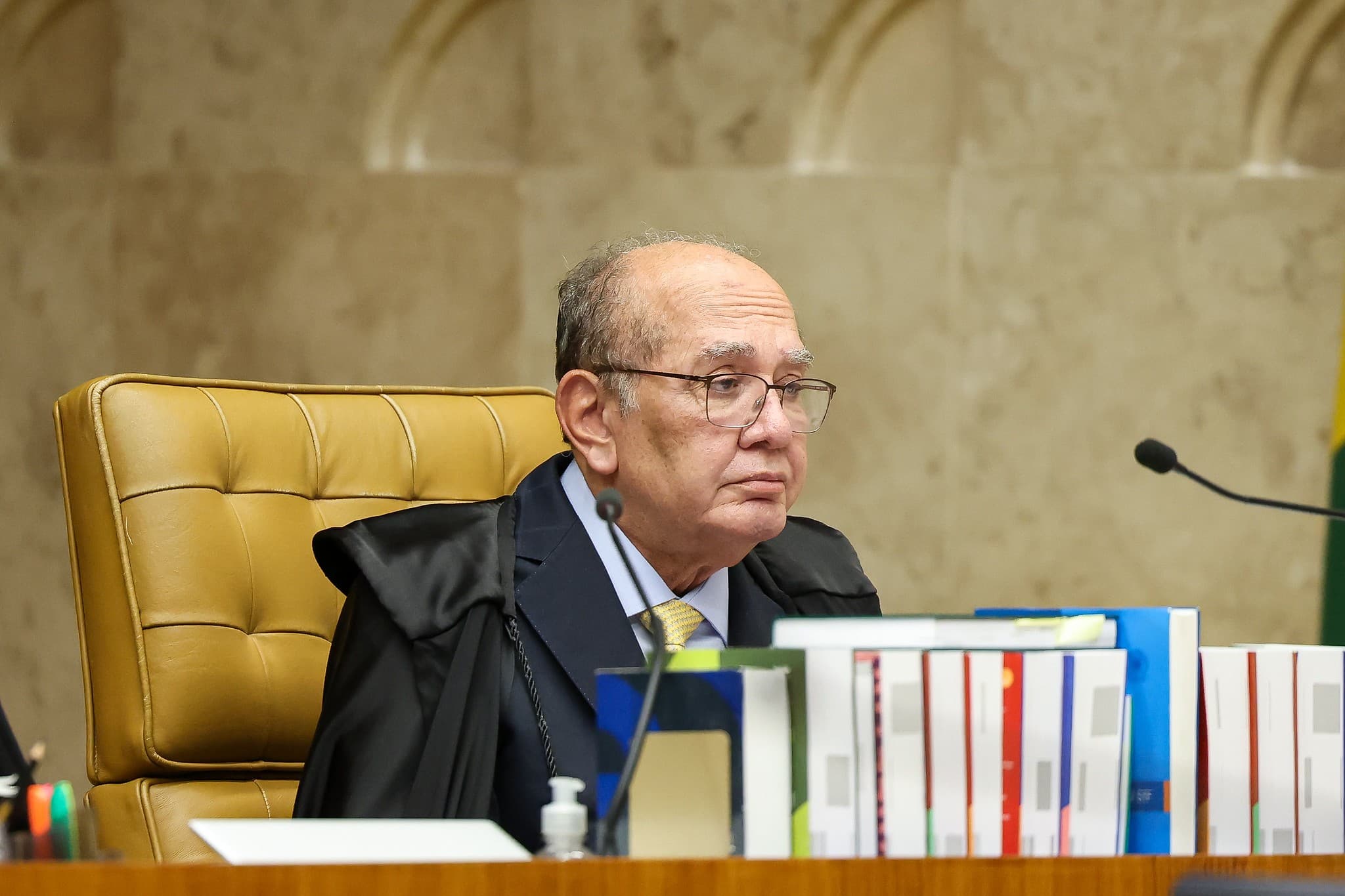
Minister Gilmar Mendes of Supremo Tribunal Federal (STF) said on Tuesday that those in charge of the Superior Electoral Court (TSE) should have an “equidistant referee” posture and said that “silences and hesitations are not neutral.” The statement was published on the social network X, without nominal mention of the current president of the Electoral Court, Kassio Nunes Marques, nor to specific episodes.
The speech comes amid debates about the conduct of the 2026 elections, which have had moments of institutional tension. The Electoral Court is chaired by Minister Kassio Nunes Marques, also a member of STF. He assumed the leadership of the TSE this year to conduct the 2026 elections and will remain in the presidency until May 2027.
Position of equidistant referee
In the publication, Gilmar Mendes argued that institutionality “should not need to be rescued at every election.” For the minister, the conduct of organs of high importance requires firmness and clarity, because “silences and hesitations are not neutral.”
According to him, these positions can “open space for contradictory decisions” and lead other instances to act on issues that could have been solved earlier. The criticism, although without a declared target, echoes the episode of the close of the vote on October 25.
The impasse at the end of the vote
On that day, the campaigns of Luiz Inácio Lula da Silva (PT) and Flávio Bolsonaro (PL) made requests to extend the voting time in the face of reports of problems that made it difficult for voters to arrive in the sections. Lula’s campaign triggered both the TSE and the STF.
Around 5 p.m., Supreme Minister Cristiano Zanin ordered the extension of the vote until 7 p.m. As part of the sections it had already closed the works, the measure could not be applied in all places. At 17:49, Kassio Nunes Marques signed a letter guiding the sections that were still open to remain in operation until 19:00.
Subsequently, Cristiano Zanin clarified that its decision should be applied only to places where the ballot boxes had not yet been closed. The episode generated criticism about the coordination between the courts and the clarity of the orientations to the electorate.
Praise to the collegiate of TSE
Despite the reservations, Gilmar Mendes praised the joint performance of the members of TSE. He said the 2026 elections demonstrated that “state institutions are larger than the members who occupy them” and credited the court’s collegiate body with conducting the dispute within democratic rules.
The minister considered, however, that the institutionality “should not need to be rescued every election”. The sentence suggests that for Gilmar Mendes, the solidity of institutions should be permanent, and not dependent on one-off reactions to each crisis.
TSE President's Statement
In the balance sheet made after the election, Kassio Nunes Marques stated that Justiça Eleitoral had conducted the election safely and that the elections had been held “within the most absolute normality”. The statement contrasts with Gilmar Mendes’s indirect criticism of the need for equidistance and readiness in decision-making.
The speech of Gilmar Mendes, although without citing names, is interpreted as a message to the presidency of TSE. The absence of explicit mention, however, maintains the debate in the institutional field, without personalizing the disagreement.
What to expect ahead
The statements of Gilmar Mendes rekindle the discussion on the role of TSE in times of electoral tension. The expectation is that the issue will be debated again in the STF and in the TSE itself, especially in the nearness of the elections of 2026.
For the voter, the central message is the defense of a Justiça Eleitoral that acts with transparency, agility and neutrality. The episode of the voting time showed how contradictory decisions can generate insecurity and questions about the conduct of the democratic process.
Read Also
Trump says Flávio Bolsonaro can stay in the U.S. for as long as he wants after election defeat
Trump in check in US midterm elections
Right will have difficulty containing STF without blocking Alcolumbre's reelection
Font
g1.globo.com