Presos in Ponta Grossa voted for Lula? See what the TSE says
Understand how voting works in prison units and what TSE records show about Ponta Grossa and Brazil

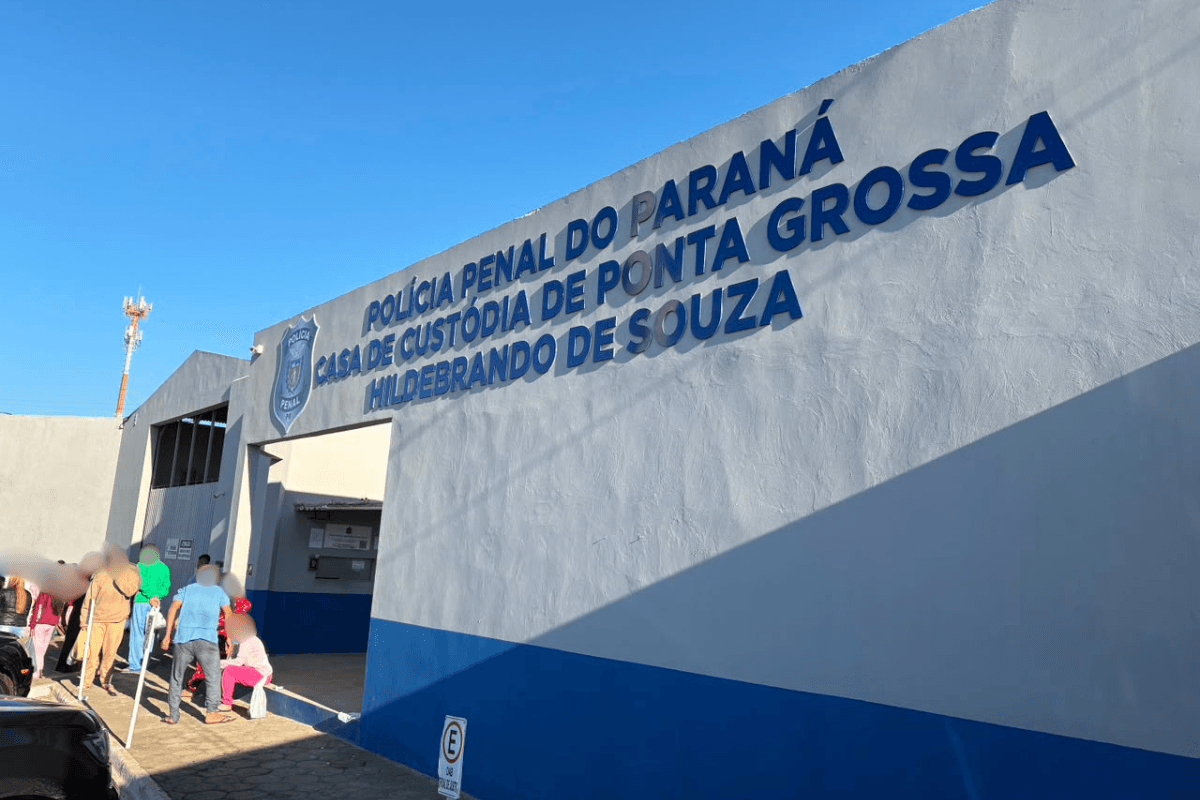
Lula received votes in electoral sections installed in Brazilian prisons. But did this happen in Ponta Grossa as well? The answer depends on the election being analyzed. A study published in 2023, by researchers linked to Ponta Grossa State University (UEPG), records that no provisional prisoners were eligible to vote for Paraná in the 2022 elections. The research specifically addresses the situation of the Hildebrando de Souza Public Chain.
This means that, in that election, there was no voting of provisional prisoners in the prison units of the state of Rio de Janeiro for Lula, Jair Bolsonaro or any other candidate. Already in 2026, the situation repeats itself: the temporary transfer base of the electorate of the Superior Electoral Court (TSE) does not register voters in the category “Provisional Prisoner” destined for the municipality in the elections of 2026, both in the first and second round.
What happened in Ponta Grossa
Signed by Victor Gonçalves Iasniewicz, João Maria de Goes Junior and Pedro Fauth Manhães Miranda, the work reports consultations with Justiça Eleitoral and the then Department of Penitentiary of Paraná.
According to the authors, the response of the department was that the number of interested parties would not justify the installation of the sections. In the case of Hildebrando de Souza, the study reports administration document with difficulties related to overcrowding and internal circulation, suggesting that the electoral section was not installed. This is a record about 2022, not a permanent ban on voting in the city.
How was the vote in Brazil
In the first round of 2026, Lula obtained 72.57% of the valid votes in the sections of prison and socio-educational units analyzed. Flávio Bolsonaro received 23.29%. The survey showed Lula's victory in 214 of the 243 units, Flavio's in 25 and a tie in four.
Also read: Lula’s Army Strategy Inspires Activists in Europe and Argentina
For the second round, a survey by SpaceMoney, which reports using the TSE ballots, showed 75.7% of the valid votes for Lula and 24.3% for Flavio in the prison and hospitalization sections included in the cut. The percentages describe these sections, without representing the entire Brazilian prison population.
A ballot box in prison does not only receive votes from prisoners
This is a fundamental detail to understand the numbers. Criminal police officers, servants and messiers can also vote in these sections by temporary transfer. Thus, it is not correct to automatically transform the percentage of a candidate in these ballot boxes into a percentage of support among all prisoners.
There is also a difference between being imprisoned and being prevented from voting. In the rules applied to the 2026 elections, provisional prisoners, without a definitive conviction, could participate as long as they met the electoral requirements. Persons with a criminal conviction on trial were prevented while the effects of the conviction lasted. Adolescents admitted with appropriate age and electoral status were also able to vote.
A small electorate, distributed among the five regions
According to data from TSE, 12,817 provisional detainees were eligible to vote in 2026. The number corresponds to qualified, not to the total that actually attended. The regional distribution was:
Regions
Pre-trial detention
Southeast
5,065
Northeast
4,829
South
1435
Midwestern
786
North
Isle of Man
Brazil
Özil
São Paulo led among the states, with 3,502 records, followed by Bahia, with 1,663, and Maranhão, with 1,271. In federal prisons, Senappen said there would be no sections in 2026 because no unit has reached the minimum required of 20 eligible provisional prisoners.
The curiosity of Ponta Grossa lies precisely in the distance between having the right and being able to exercise it: in 2022, the local study recorded the absence of a vote of provisional prisoners, although this group preserved the right to vote. The national results show another necessary caution: knowing where the ballot box was installed does not allow identifying the condition of each voter or revealing their vote.