Quaest: 7 states already have likely winner in the first round
Analysis of Quaest state polls for president reveals three distinct Brasils: Lula ahead in the Northeast, Flávio in the North and Center-West, and a technical tie in key states like SP, MG and RS. Seven states already have a likely winner in the first round by the most rigorous criterion.

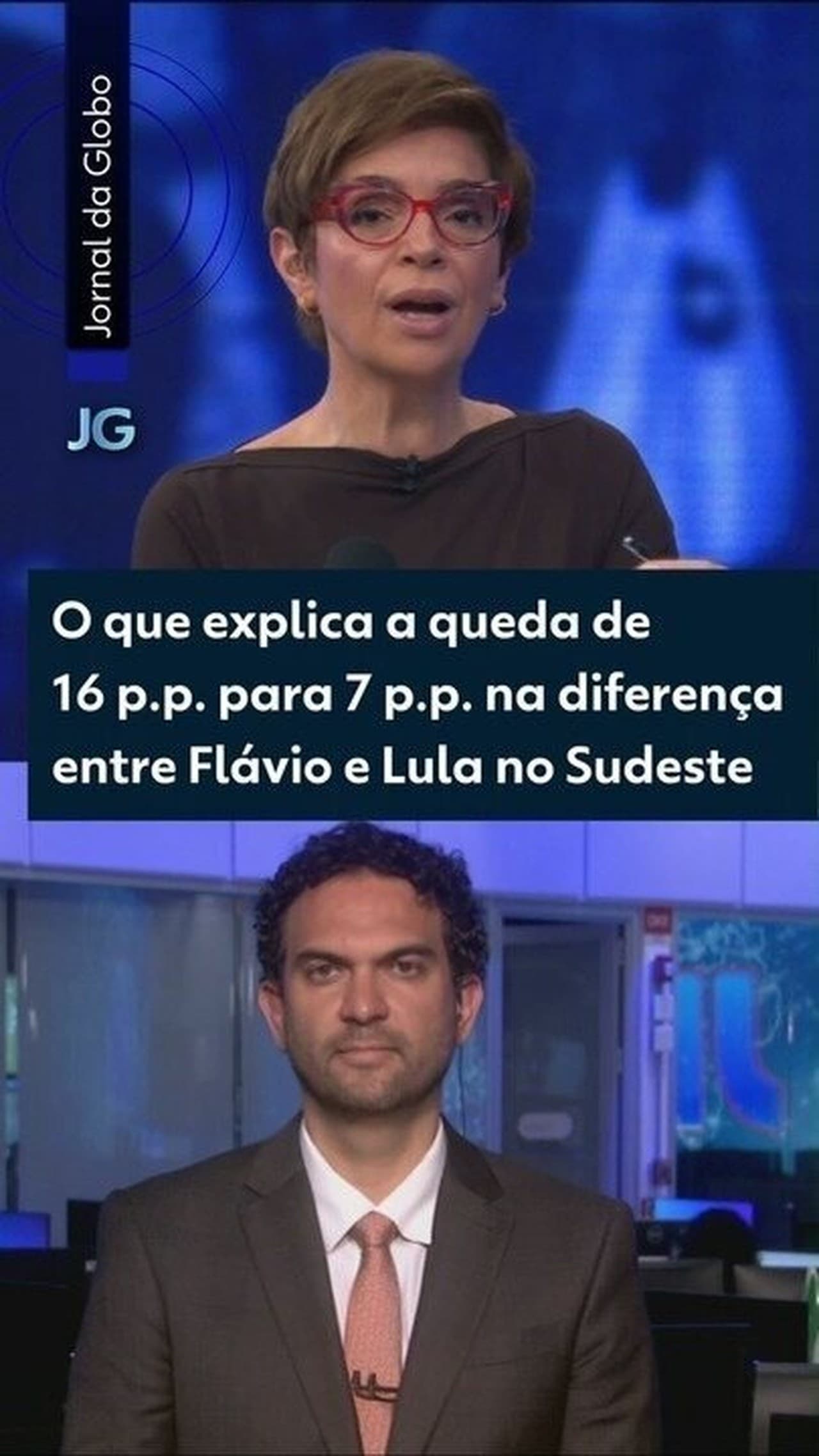
Political scientist Felipe Nunes analyzed Quaest’s state polls for the presidential election and identified a scenario of calcification of the vote, with little change from 2022. In the states, the rule is another: solve early. By the most rigorous criterion — leader above the sum of the others, outside the margin — seven states already have probable winner in the first round: Roraima, Amapá, Piauí, Paraíba, Mato Grosso do Sul, São Paulo and Santa Catarina. Another 14 are on the margin of error, which keeps the dispute open.
Três Brasis on the electoral map
The map of the first turn reveals three distinct Brasis. Lula appears in front in ten states, concentrated in the Northeast and Amapá. Flávio leads in eight units, including Rio de Janeiro, Paraná, Santa Catarina, Mato Grosso do Sul, Mato Grosso, Acre, Rondônia and Roraima. Nine other states are tied within the margin of error, including São Paulo, Minas Gerais and Rio Grande do Sul, which concentrate much of the electorate.
This regional division reflects the consolidation of electoral bases already observed in previous elections. The dispute focuses on undecided states, where independents can define the outcome.
Calcified Vote Since 2022
The Lula vote today is almost a copy of the 2022 result. The correlation between the current voting intention and the performance in the first round of last election is 0.98, a very high index that indicates stability. The same phenomenon occurs in the opposite field: the vote on Flavio repeats that of Jair in 2022, with a correlation of 0.95. He changed his name, the electorate stayed.
This calcification suggests that campaigns will have difficulty broadening their bases. The focus must be on mobilizing voters themselves and conquering the undecided.
Where each candidate grows
Lula grew up mainly in the Northeast, where he was already strong. The largest advances are in Maranhão (+7), Bahia (+6), Paraíba and Sergipe (+4). Outside the region, almost nothing changes: variations range from -3 in Goiás and Tocantins to +3 in the Federal District, with the exception of Amapá (+6). Lula deepens the vote where he already had.
Flávio improves in relation to Jair in the North and in the Midwest: Rondônia (+6), Mato Grosso (+5), Pará (+4) and even in Bahia (+5). However, loses where the right has alternative: Distrito Federal (-8), Goiás (-6, state of Caiado), Paraná, Rio Grande do Sul and Espírito Santo (-3).
Independents decide the election
The game is on the independents, who account for 24% to 36% of the electorate in the states. The peak occurs in Rio de Janeiro (36%), Amazonas (35%) and in Tocantins, Rio Grande do Sul and Goiás (33%). It is these voters who can tilt the balance in key states.
Lula goes beyond the field itself: in almost all states, he has more votes than the sum of Lulistas and non-Lulista left, especially in the Northeast. Flávio, on the other hand, does not consolidate his electorate in Minas Gerais, Goiás, Distrito Federal and São Paulo, where it is below the sum of the right.
Approval of government influence
The government's approval helps explain the map. The balance is positive in the Northeast, Amazon (+7) and Pará (+4), but negative throughout the Center-South. Minas Gerais (-5) and Tocantins (-3) are tied, and are precisely states in dispute.
Fear also organizes the vote. In the Northeast, almost 60% fear the return of the Bolsonaro family. In the North and South, up to 64% fear a further term of Lula. The fear of the two reaches 8% in Minas Gerais, São Paulo, Rio de Janeiro, Federal District and Goiás: there lives the voter in dispute.
Perception of favouritism and volatility
A curious fact: even where he is tied or behind, Lula is seen as a favorite. In São Paulo, 50% think he wins, compared to 35% who point to Flavio. In Rio de Janeiro, 49% to 37%. In Paraná, 44% to 40%. Flavius is only listed as a winner in seven states.
And there is still room for change. Among those who cast their vote, 11 to 23 percent say the choice can change. The most volatile are Paraná (23%), Amapá (21%), São Paulo and Santa Catarina (20%), Minas Gerais and Distrito Federal (19%).
The data reinforces a stable polarization scenario, but with pockets of indecision that can be decisive. Follow the next rounds of research on the Boca no Trombone to understand how the framework evolves.
Read Also
Quaest in Pará: Helder leads with 25% for the Senate
Candidates exchange states for Senate seats in 2026
Government plans meeting with clubs after betting ban
Font
g1.globo.com