STF maintains Eduardo Bolsonaro's conviction for 4 years
The First Chamber of the STF denied the Union Public Defender's appeal and upheld Eduardo Bolsonaro's conviction. The former deputy was sentenced to 4 years and 2 months in prison for alleged coercion during the proceedings.

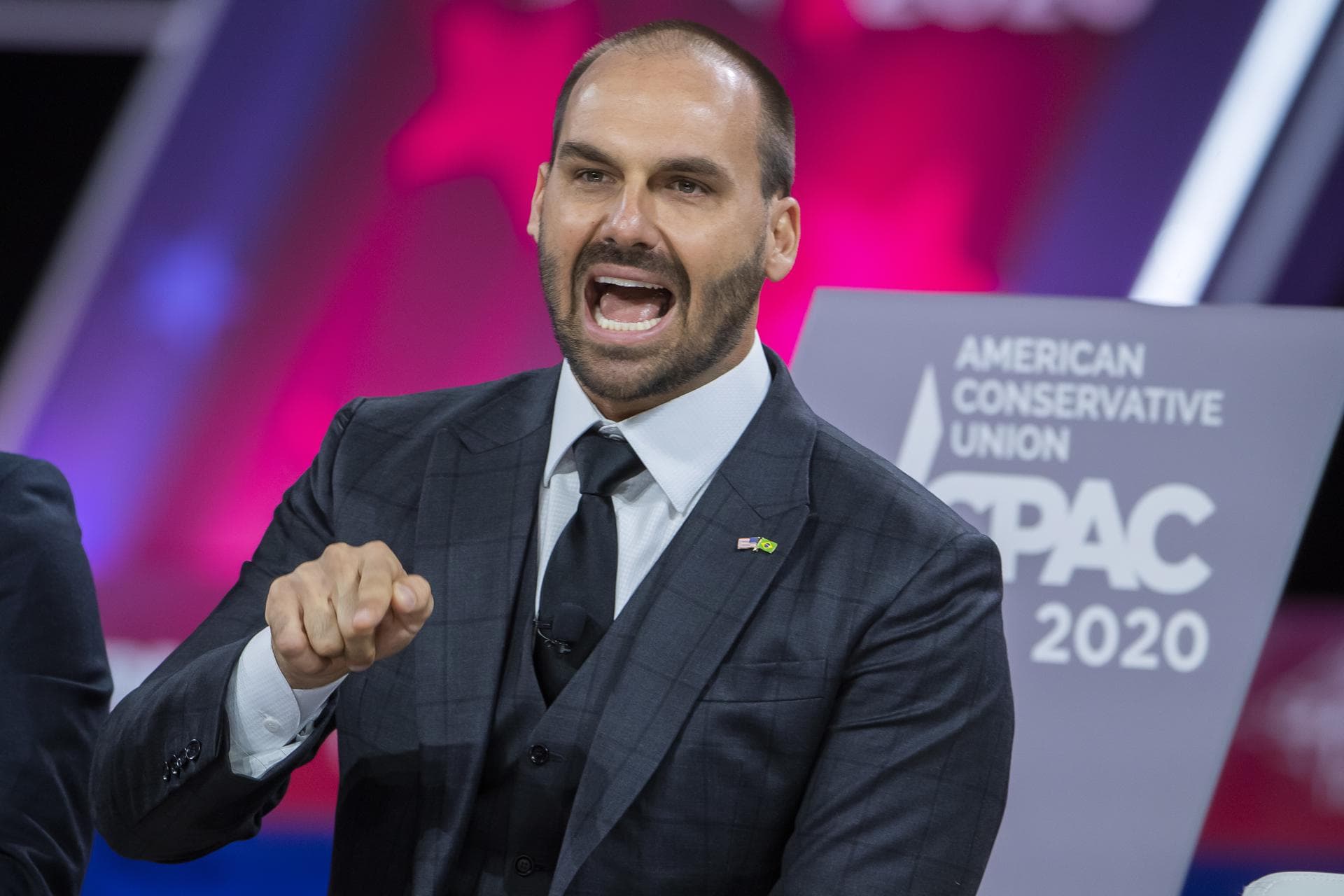
The First Class of Supremo Tribunal Federal (STF) on Friday rejected the appeal of the Public Defender of the Union (DPU) in favor of the former deputy Eduardo Bolsonaro (PL-SP) and maintained his sentence to 4 years and 2 months in prison for alleged coercion in the course of the process. The decision was taken in a virtual session, with the vote of the rapporteur, Minister Alexandre de Moraes, accompanied by the other members of the collegiate body.
The former MP was convicted in June of this year. The following month, the DPU appealed arguing that the former parliamentarian’s statements were used by the ministers as evidence to convict him, but were not considered an extenuating circumstance in the fixing of the sentence. The defense sought to reduce punishment based on confessional recognition.
The rapporteur denies attenuation for lack of spontaneity
The minister Alexandre de Moraes, rapporteur of the case, stated that the confession must be spontaneous to be considered an extenuating factor, which did not happen in the case of Eduardo. According to the magistrate, the former deputy did not admit the practice of the crime, only produced evidence that incriminated himself without acknowledging the illegality.
"In the case of the autos, it is inadmissible to recognize the incidence of the mitigating of spontaneous confession, since the defendant Eduardo Nantes Bolsonaro, although he produced a robust probative set of his criminal conduct, never admitted the consummation of the crime," said the minister. Speech is included in the vote presented during the virtual trial.
The Minister stressed that the case law of STF establishes that the so-called "qualified confession" - a situation in which the agent admits the authorship of statements, but provokes exclusions or acts without the spontaneous intention of collaborating with the Justice - does not give the right to the reduction of the sentence. Thus, the mere production of evidence does not amount to a valid confession to mitigate the reprimand.
Validity of citation by edict is reiterated
Moraes also reiterated the full validity of the citation of the former deputy by edict. The point had already been questioned by the defence at other stages of the process, but the rapporteur maintained the understanding that the procedure was regular. The citation by edict is used when the defendant is not located to be quoted personally.
The rapporteur's vote was followed by Ministers Cristiano Zanin, Flávio Dino and Carmen Lúcia. With the decision, the sentence imposed in June is maintained, without reduction of the sentence. The First Class is composed of five ministers, but the source did not detail whether there was absence or impediment of any member in the session.
Eduardo Bolsonaro reaction to conviction
After the June trial, Eduardo called the conviction “without a head and feet” and said that a “sentence without due process of law is null and void.” He claimed he was not formally quoted and said he had learned of the decision only from the press. The statements were made on social networks and resonated with the press at the time.
The former deputy also criticized the use of his public demonstrations as evidence, arguing that there was no intention to coerce anyone. The technical defence, represented by the DPU, did not express itself publicly after the new decision. The source did not detail whether there will be an appeal against the First Class decision.
Next steps in the process
With the rejection of the appeal, the conviction goes on trial to the defense, unless there is interposition of embargoes of declaration or other appropriate appeal. The sentence of 4 years and 2 months of imprisonment, in initial regime to be defined, still depends on analysis on possible provisional execution. The source did not elaborate on the punishment regime.
The case continues to generate debates about the limits of freedom of expression and the use of public statements as evidence in criminal proceedings. The decision of the First Class reinforces the understanding that the confession, to mitigate the penalty, must be voluntary and accompanied by the recognition of the illegality, which did not occur in the concrete case.
Read Also
Lula called Bolsonaro ineligibility in 2022 after Bolsa Família increase on the eve of the election
Attention, motoboys: rules change and old demands come back into force
Sebrae evaluates taking the Entrepreneur Fair to Ponta Grossa
Font
www.gazetadopovo.com