Arroz soltinho: to wash or not to wash the grains?
The secret to loose rice is not only in the oil. Washing the grains can reduce surface starch and separate them better, but the technique varies according to the variety. For risottos, for example, starch is essential for the creamy texture.

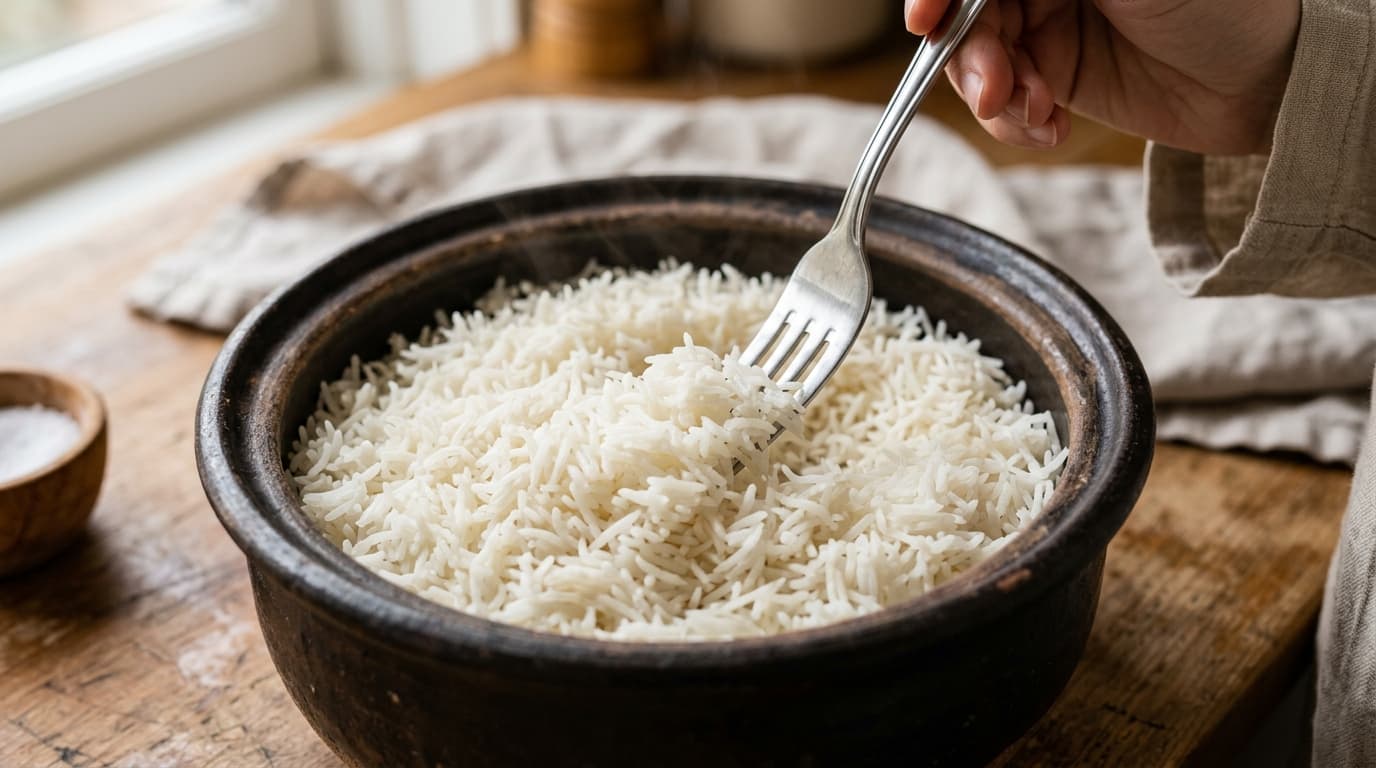
Who has never tried to make a lonely rice and ended up with a soaked pot? The blame is often attributed to the amount of oil. However, experts point out that the secret begins before the pot even goes to the fire: wash the grains or not. The decision, however, is not universal and depends on the type of rice used.
Starch: the villain or ally of texture
Grains release starch when they come into contact with water and heat. Some of this starch is already present on the surface because of the benefiting and friction between the grains themselves. The more free starch there is, the greater the chance of the liquid thickening and the grains sticking to each other.
This phenomenon explains why some rice becomes more sticky after cooking. The presence of loose starch acts as a natural glue, making it difficult to separate the grains. Therefore, controlling the amount of superficial starch is an important step for those who seek a looser rice.
When washing helps to loosen the grains
Rinse the rice removes some of this superficial excess. This may favor a more separate outcome in long-grain varieties, especially when the proposal is to serve a very loose rice. The cloudy water that runs in the washing is precisely the starch being eliminated.
Long-grained rice, such as basmati and some varieties used on a daily basis, may become looser when washed until the water leaves less cloudy. The same is true when the goal is to reduce the loose starch left by processing. The practice is simple and does not require special equipment.
How to wash rice properly
To wash, simply put the rice in a bowl or sieve. Then add water and stir gently with your hands. Repeat the process until the water is less white. It is not necessary to wash until the water becomes absolutely transparent. The goal is to reduce excess starch, not to remove everything.
This technique is especially useful for those who prepare long grain white rice and want a light and loose accompaniment. The time spent is minimal, but the result may be noticeable in the final texture.
When starch is welcome
There are preparations in which starch is just part of the desired texture. Rice, for example, relies on starch-rich varieties, such as arborio or carnaroli, to form a creamy consistency during cooking. In such cases, washing thoroughly can remove some of the surface starch that helps create the characteristic sauce.
The same reasoning applies to recipes in which greater cohesion is sought between the grains. Rice for cake, sushi or desserts can benefit from a more sticky texture. Therefore, washing or not washing should be a conscious decision, based on the dish that will be prepared.
Attention to enriched rice
Some enriched rice may also have specific orientation on the packaging, because washing can remove nutrients added to the surface. Therefore, it is worth checking the manufacturer's instructions. In case of doubt, follow the label recommendation so as not to lose the nutritional benefits.
This information is relevant to consumers who opt for fortified products, common in food supplementation programs. Indiscriminate washing can reduce the effectiveness of these nutrients.
The role of oil in the equation
The oil can help wrap the grains during sautéing and add flavor, but it does not work as a perfect barrier against starch. Putting more fat does not correct excess water, inadequate pot or a very starchy rice for the intended texture.
Therefore, increasing the amount of oil is not the magic solution for a soaked rice. The result depends on the combination of several factors: grain type, washing, water ratio, fire control and rest time after the fire is turned off.
There is no single rule
There is not a single rule that works for all varieties. Washing rice can help when the goal is to reduce superficial starch and better separate the grains, but it can be unnecessary or even undesirable in recipes that rely on this starch to gain creaminess.
Therefore, before increasing the oil or automatically repeating the same method, it is worth looking at the type of grain and the expected texture. Lonely rice is born more of a technique compatible with the chosen variety than of a single ingredient placed in the pot.
For readers of Ponta Grossa and region, the tip is to try different methods with the rice available in the local market. Observing the response of each variety to washing can transform the routine in the kitchen. After all, a good rice is the basis of countless Brazilian meals.
Loose rice does not start in the amount of oil: washing or not washing the grains changes as the type of rice used first appeared in Free Window.
Font
catracalivre.com
basmati (en.wikipedia.org)