Meta and TSE: Debate on Social Media Dispute
The podcast O Assunto #1826 discusses the dispute at TSE around social media. Natuza Nery interviews Fernando Neisser and Bruno Mattos to analyze decisions and accusations against Meta.


Episode #1826 of the podcast The Subject, presented by Natuza Nery, plunges into the dispute involving the Meta and the Superior Electoral Court (TSE) regarding social networks. The edition brings two guests: the jurist Fernando Neisser, professor of electoral law of FGV-SP, and Bruno Mattos, project coordinator of NetLab, of UFRJ. Together, they analyze the recent decisions of Justiça Eleitoral and the allegations against the tech giant, at a time when digital platforms gained prominence in the second round of elections.
The conversation starts from a tense scenario: on the one hand, the TSE seeks to regulate the use of networks during the election period; on the other, companies like Meta face accusations of not curbing irregularities. The episode explains what parties and platforms may or may not do, and discusses the authorities’ difficulty in tracking violations in the digital environment.
Experts evaluate decisions of the TSE
Fernando Neisser, professor of electoral law at FGV-SP, details the decisions of the TSE and their impacts. He points out that the court has acted to set clear limits to election propaganda on social media. According to the jurist, parties and candidates must follow specific rules, such as the prohibition of boosting negative content against opponents. Neisser also points out that the platforms have an obligation to remove irregular content within 24 hours after judicial notification.
The professor points out that the TSE has taken a more rigid stance on misinformation. He cites the resolution that expanded the court’s police power to bring down fake publications without the need for provocation. For Neisser, this measure is essential to guarantee the smoothness of the proceedings, but requires care not to injure freedom of expression. The source did not detail specific cases of application of these rules.
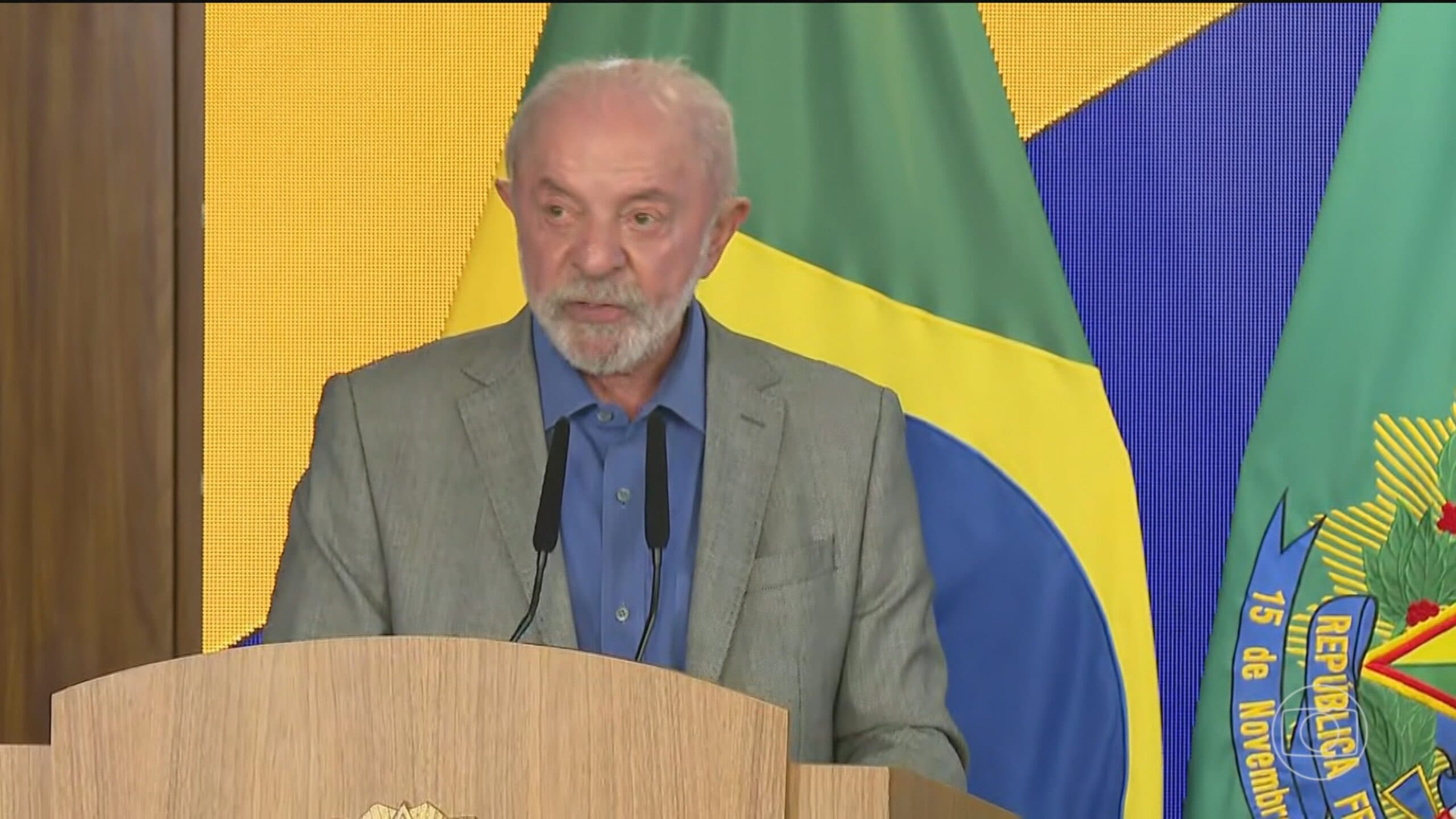
In addition, the lawyer addresses the responsibility of the platforms. He explains that Meta, owner of Facebook, Instagram and WhatsApp, must comply with the TSE determinations under penalty of fine and even suspension of services. The discussion becomes relevant because social networks became the main campaign stage in the second round, as recorded in a photo of Marcello Casal Jr/Agência Brasil.
Complaints against the target in focus
Bruno Mattos, coordinator of NetLab, of UFRJ, brings the look of academic research on the complaints against Meta. He explains that the research group monitors the circulation of political content on the platforms and has identified flaws in moderation. According to Mattos, the company has failed to prevent the spread of disinformation and hate speech, which violates Brazilian electoral rules.
The coordinator highlights the difficulty of the authorities in monitoring the irregularities. He mentions that the volume of publications is gigantic and that the tools of oversight are still limited. Mattos says NetLab has been sending reports to TSE with evidence of irregularities, but the platforms’ response has been slow. The source did not detail the specific content of these complaints.
Another point raised by Mattos is the lack of transparency of the Meta. He criticizes the lack of public data on political announcements and the company’s resistance to collaborating with researchers. For the coordinator, this position hinders independent auditing and favors impunity. The discussion connects to the global debate about regulation of big techs, but the focus of the episode remains in the Brazilian scenario.
The President must act as a regulator
One of the central themes of the episode is the role of the President of the Republic in the regulation of social networks. The guests agree that the Chief Executive should act as a regulator and not as a judge. This means that it is up to the president to propose public policies and charge for compliance with the laws, without directly interfering in judicial decisions.
Fernando Neisser stresses that the separation of powers is fundamental. He warns of the risk of the president using his influence to pressure the TSE or the platforms for his own benefit. Bruno Mattos adds, recalling that the regulation of networks requires a joint effort between Executive, Legislative and Judiciary. The source did not detail examples of presidential action in this regard.
The debate on regulation is gaining even more relevance in the face of the approach of the municipal elections. Experts argue that the rules should be clear and applied uniformly, to avoid abuses of economic and political power. The expectation is that the TSE will continue to improve its resolutions to keep up with the evolution of technologies.
Challenges for authorities and platforms
The episode also addresses the authorities’ difficulty in tracking irregularities on social media. Bruno Mattos explains that the speed of propagation of fake content exceeds the ability to monitor. He cites the use of robots and fake accounts to amplify misleading messages, which makes detection more complex.
In addition, platforms face the challenge of balancing freedom of expression with the need for moderation. Mattos points out that Meta has adopted inconsistent policies, removing some content and keeping others without clear criteria. This lack of predictability creates legal uncertainty for users and candidates.
For Neisser, the solution passes by more robust legislation and greater transparency of companies. He suggests that TSE require periodic reports on content moderation and political advertising. The source did not detail whether there are any concrete proposals in the Congresso Nacional.
Impact in the second round
Social networks gained prominence in the second round of elections, as recorded in a photo of Marcello Casal Jr/Agência Brasil. The episode highlights that platforms have become the main means of communication between candidates and voters, surpassing TV and radio in scope and segmentation.
This centrality increases the responsibility of technology companies. The guests warn that lack of control can distort public debate and unduly influence the vote. They cite cases of irregular boosting and spreading of fake news, but the source has not detailed specific numbers or examples.
The podcast O Assunto is produced by Luiz Felipe Silva, Carlos Catelan, Luiz Gabriel Franco, Juliene Moretti, Stéphanie Nascimento, Marco Antônio Martins and Thomé Granemann. The presentation is given by Natuza Nery, who leads the conversation with depth and clarity.
Next steps in regulation
The episode ends with a reflection on the future of the regulation of social networks in Brazil. Experts argue that the TSE will continue to act proactively, but without replacing the role of the Congresso Nacional. They believe that a specific law for digital platforms is necessary to give legal certainty to all involved.
In the meantime, complaints against Meta are still under review. Bruno Mattos says NetLab will continue to monitor the platforms and send evidence to authorities. The expectation is that the next municipal elections will serve as a test for the new rules of the TSE.
For the reader of Ponta Grossa and region, the issue is of direct interest, as the decisions of TSE affect local electoral propaganda and the use of networks by mayoral and councillor candidates. Follow-up to this debate is essential to understand the rules of the democratic game. The Boca no Trombone portal will continue to cover the unfolding of this dispute.
Read Also
Who will be the new president of the country? Research points to a sharp scenario
Cleitinho goes bad after speech in the Senate and cancels act
Congress passes mandatory examination for doctors
Font
g1.globo.com