War in Yemen displaces over 200,000 people
The escalation of violence in Yemen has already forced more than 200,000 people to leave their homes, according to the International Organization for Migration. The province of Taiz is the most affected, with 114,000 displaced. The conflict involves the Houthis and the coalition led by Saudi Arabia.

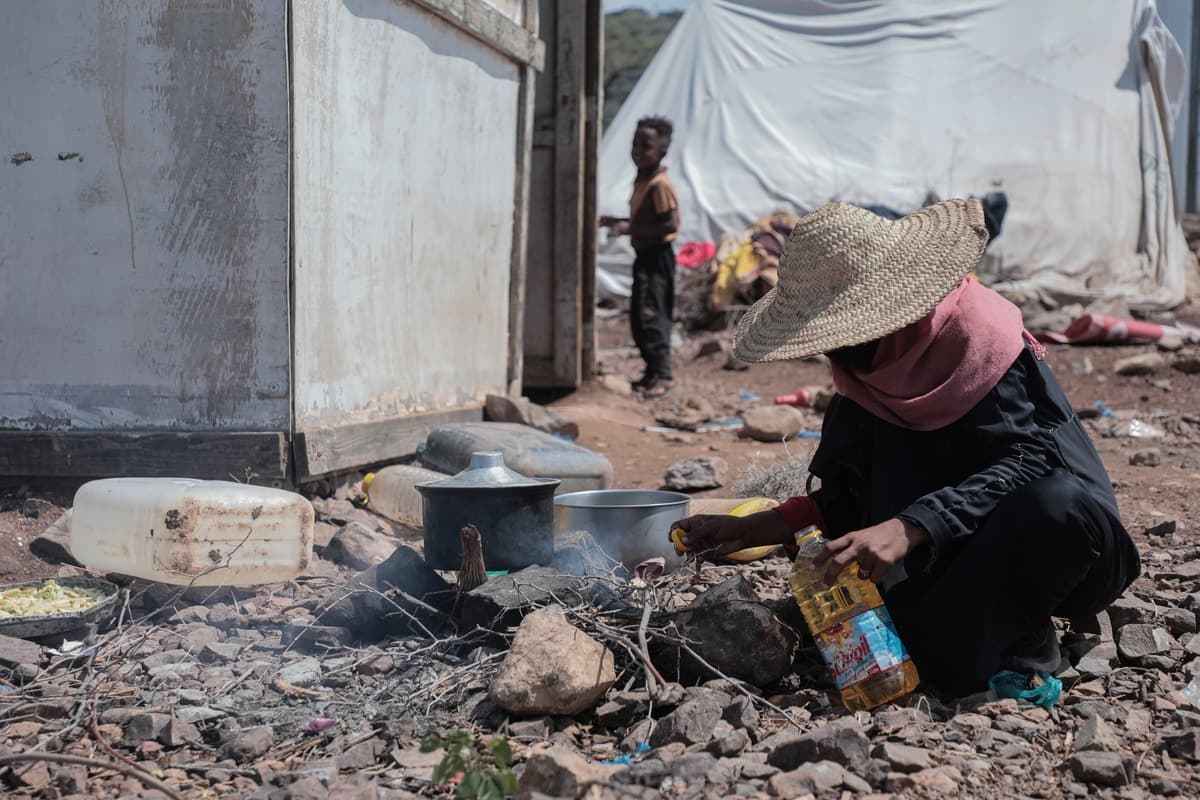
More than 200,000 people have been forced to leave their homes in Yemen since the fighting began, according to the International Organization for Migration (IOM). The number represents about 33,000 families. Most of the displacements occurred as of September 1, when 197,755 people fled.
Taiz province, in the southwest of the country, concentrates the largest volume of displaced people: approximately 114,000 people have left the region in recent days. The exodus occurs after the Houthis advance over the site, considered vital for access to the Red Sea and the Gulf of Aden.
Taiz concentrates most of the displaced
In addition to Taiz, nine other provinces have registered movements of internal refugees: Lahj, Aden, Abryan, Al Hodeidah, Hadramawt, Shabwah, Marib, Al Maharah and Ad Dali. The IOM did not detail the number of displaced persons in each of these regions.
The humanitarian scenario is worsening in a country that is already facing one of the worst crises in the world. The civil war, which began in 2014, left millions of Yemenis dependent on international aid.
Who the Houthis are and why they fight
The Houthis are a political-religious movement created in the 1990s, composed mostly of followers of Zaidism, one of the three strands of Shiite Islam. The group has controlled parts of Yemen since 2014, when it launched an offensive against the then government, starting a 14-year civil war.
In 2015, Saudi Arabia formed a military coalition to support the internationally recognized Yemeni government. Since then, Houthis positions have been bombed in Yemen. Fighting between the Saudi alliance and the Houthis continued until 2022, when the UN brokered a ceasefire.
Iran Support and Attacks on the Red Sea
The Houthis receive support from Iran and defend the Palestinian cause. After the beginning of the war in the Gaza Strip, the group went on to attack ships linked to Israel in the Red Sea and to launch drones and missiles towards Israeli territory. In response, Estados Unidos and the UK attacked Houthis positions in Yemen between 2024 and 2025.
In the second half of 2026, the truce between the Houthis and Saudi Arabia was broken, and the two sides resumed hostilities. At the same time, the group expanded its control over northern Yemen and now dominates virtually all of the country’s access to the Red Sea.
Breaking the ceasefire in July
Hostilities resumed in Yemen in July this year after the Houthis accused Saudi Arabia of attacking the group's Sanaa International Airport. The incident put an end to the fragile ceasefire in force since 2022, mediated by the UN.
In addition to launching attacks on Saudi territory, mainly targeting oil facilities, the Houthis launched an offensive on the west coast of Yemen. The coastal region gives access to the Red Sea and the Bab el-Mandeb Strait, a strategic route for global trade.
International Coalition mobilizes
Earlier this week, Pakistan and Turkey pledged to send military aid to Saudi Arabia in the face of Houthis attacks. The three countries signed in August the Mecca Joint Defense Agreement, dubbed “Islamic NATO”.
The escalation of the conflict increases the pressure on the civilian population, which already faces mass displacement, hunger and the collapse of basic services. The international community is following with concern the worsening humanitarian crisis in Yemen.
Read Also
Pope Leo XIV is constantly improving, says Vatican
Earthquake of magnitude 7 hits Kamchatka in Russia
Font
Metropoles.com