Agronomy Course at UEPG Completes 40 Years
Agronomy Course at UEPG Completes 40 Years of Training Professionals; Celebration Highlights Pioneering Efforts and Educational Quality

It was March 1983. The activities of the first class of the course of Agronomy of the State University of Ponta Grossa (UEPG) began.
Over the following 40 years, about 1750 agronomic engineers passed through the portfolios of the institution, who today work in companies, organizations, research institutes and universities, in the most diverse areas focused on agricultural production. The celebration of the four decades of acting was marked by a ceremony at the opening of the 13th Academic Week of Agronomy (Semanagro).
Read also: 1st Transforma Agro Paraná announces the schedule and general regulations of the event
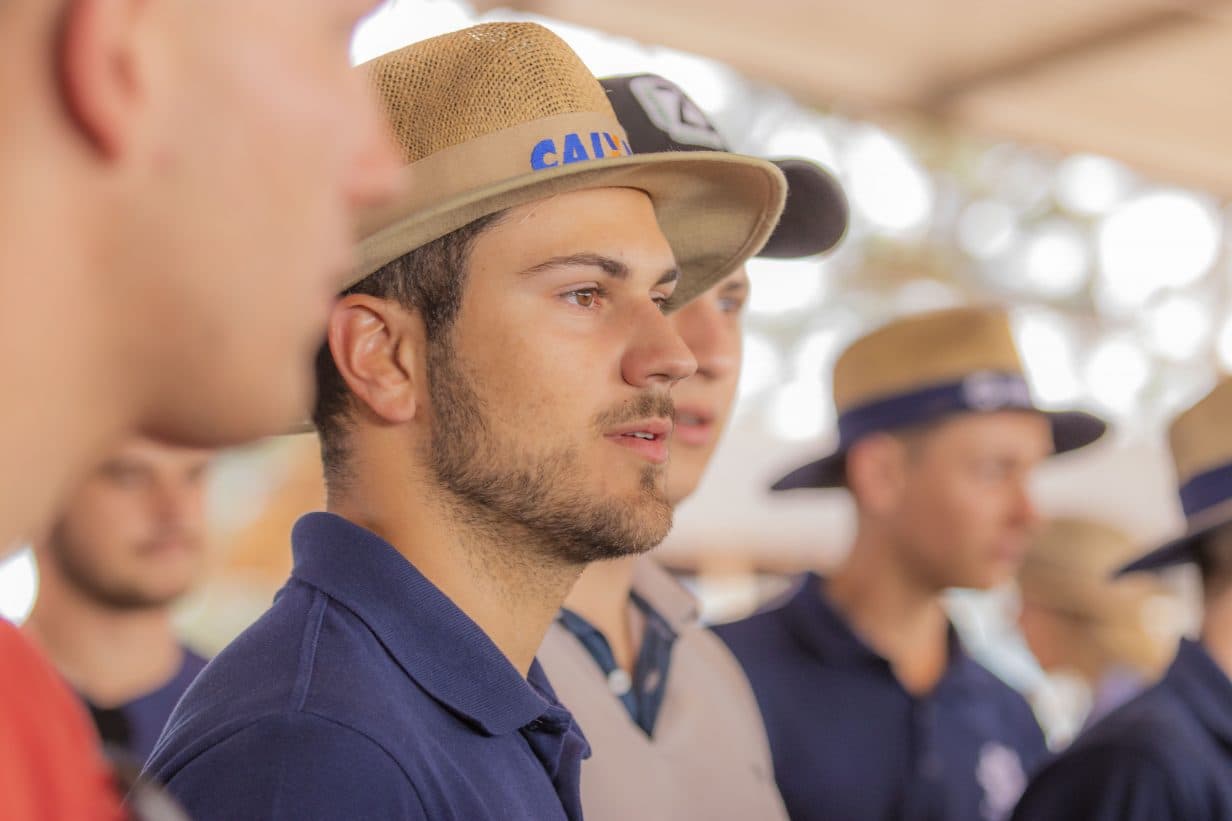
Smiles, emotion, memories. The morning of Monday (August 21) was marked for those who lived the history of the course and for those who are the present and future of the profession. The auditorium of the Integrar Center was full of students from all the years of the course, graduates who work in the most diverse areas, professors and servers who work at the University currently and retired professors who have left their mark on the institution. Praising standing, he had no dry eye among the retired teachers outlined in front of the public.
“Today I prepared to come here as if I had come for a class. I put on my old boot, my jeans, I brought my cap, I did everything I did when I was a teacher.” After a few years of retirement, Professor Altair Justino was eager to review colleagues, meet new teachers (many of whom were his students) and current undergraduate students.
He, who was the first coordinator of the course of Agronomy, remembers with affection the trajectory of the course and is proud to be part of this history. “I feel fulfilled, with a duty fulfilled on my part,” he says. “There were many battles and many achievements. We see the course at this level and are very happy with everything that has happened.”
The program of the Academic Week, this year, was specially designed to celebrate the anniversary. According to the president of the Academic Center, Murilo Freitas, the activities of the event were taught by graduates of the course or with people related to the University.
The lectures and workshops addressed topics such as the management of beer barley in the Campos Gerais, corn seeds, phytopathology, direct planting, bioinputs, agronomic consulting, agribusiness, employability, organic cultivation of vegetables, research and development of physical and agricultural defensives, planting and regulation of sowing plants, application technology and soil analysis.
Quality training
“The Agronomy course is one of the stars of UEPG,” said the course coordinator, Professor Luiz Cláudio Garcia. “Our responsibility is to deliver qualified professionals to society, which invests so much in quality public education.” Professor Adilson Chinelatto, director of the Engineering, Agricultural Sciences and Technology Sector, emphasized the high quality of the degree, demonstrated in maximum results in the evaluations, such as the National Student Performance Examination (ENADE), in which the course obtained a maximum grade (5) in six consecutive evaluations. “The challenges faced were not few and we see how much you fought to make it possible to offer a course of the highest quality.”
“Everyone is proud to say that he is graduated in Agronomy by UEPG”, commemorates the head of the Department of Soil Sciences and Agricultural Engineering, Professor Pedro Henrique Weirich Neto. For him, it is a pride to be able to contribute to the history of the course and to the training of thousands of professionals.
For Professor Rodrigo Rodrigues Matiello, head of the Department of Phytotechnics and Phytosanità, this trajectory of the course of Agronomy is marked by dedication and by overcoming divergences. “When we demand a lot of students in graduation, it is because we want to visualize the excellent professionals we have always trained,” he said.
History and pioneering
The beginning of the course was the result of an internal process in 1976, in the management of the rector Odeni Villaca Mongruel, with authorization for implementation in 1982, under the rector Daniel Albach Tavares. First, the activities took place at the UEPG Center Campus. With the creation of the Uvaranas Campus, on August 19, 1985, the course received a didactic space, Block F, built with soil-cement technology, ecological building material developed by UEPG.
“The conquest of the Block was a milestone. We have begun to take root,” jokes Professor Altair. Around, almost nothing: only the athletics track and the swimming pool had been built on the Campus, the latter inaugurated on the same day as the Blocks of Agronomy and Civil Engineering. The Colégio Agrícola Augusto Ribas (CAAR), built in 1937, was still practically inaccessible, since there was no bridge connecting the two spaces of the Campus above the train line.
Another important space is the Fazenda Escola Capão da Onça (Fescon). With about 312 hectares, it was created on April 1, 1985, to develop teaching, research, extension and production activities. In the space, there are agricultural and livestock areas; a large laboratory for the activities of the UEPG courses.
The course of Agronomy has a trajectory of pioneering, according to Professor Altair. “We were the first course to apply a teste seletivo for teacher hiring and the first to require students to develop a Course Completion Work at the end of graduation,” he recalls.