Housing in SP: Tarcísio and Haddad differ on proposals
Tarcísio de Freitas and Fernando Haddad expose opposing views on housing in São Paulo. While the governor bets on expanding Casa Paulista, the petista proposes a state program inspired by Minha Casa Minha Vida Entidades.

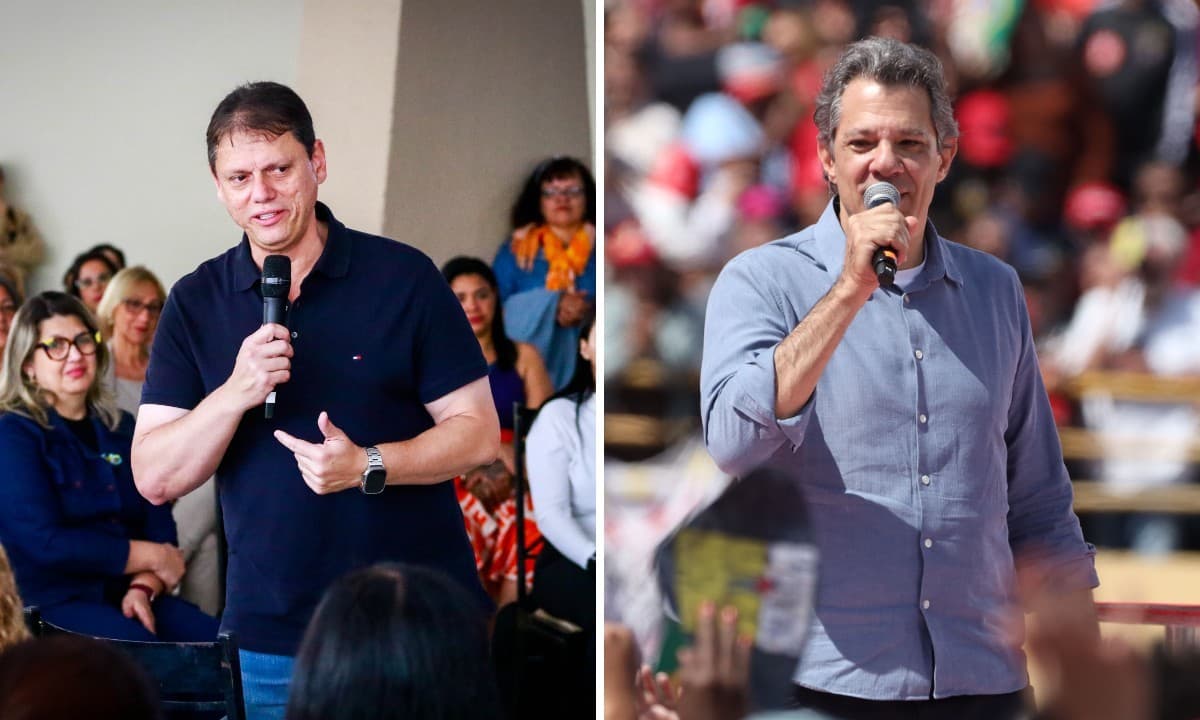
In the dispute for the government of São Paulo, the proposals of the candidates Tarcísio de Freitas (Republicans) and Fernando Haddad (PT) for the housing area reveal two distinct views on the role of the state in reducing the housing deficit. On the one hand, the current governor bets on the expansion of policies already implemented during his management, with the Casa Paulista program as the main instrument. On the other hand, the former mayor of the capital proposes a policy more aligned with the housing programs of the federal government, with greater participation of cooperatives and social movements.
Elections in 2026 put on the agenda the challenge of guaranteeing dignified housing for more than one million São Paulo residents, according to estimates. Despite the differences in the model, the two candidates converge when identifying risk areas, favelas, springs and stilts as priorities. They also advocate that housing policies be integrated into basic sanitation, urban infrastructure and public facilities, as well as providing for actions aimed at vulnerable groups, such as the elderly and women in situations of violence.
Casa Paulista: expansion and ambitious goals
Tarcísio promises to expand the service of Casa Paulista in favelas, risk areas, springs and stilts, with the goal of tripling the number of beneficiaries and serving more than 30,000 families in these territories. The plan also provides for urbanization actions through the SP Neighbourhoods Connected program. In the specific case of stilts, the governor proposes an urban solution that includes the construction of dwellings on the waters, associated with sanitation works, public lighting, leisure areas, commerce and urban infrastructure.
The Villa Gilda Dam, considered the largest cluster of stilts in Latin America, is one of the focus of this proposal. The source did not detail the execution schedule. Tarcísio’s strategy is based on the combination of state resources, letters of credit, subsidies and private sector participation, with investments of about R$ 9 billion through Casa Paulista.
Haddad proposes Minha Casa Minha Vida state
Fernando Haddad, in turn, intends to review the Life Digna program, focused on stilts, with a focus on the resettlement of families, environmental recovery and social monitoring throughout the process. It also wants to strengthen the Better Living program, aimed at housing reforms, including structural, sanitary, accessibility and risk reduction. The petista also proposes the creation of an integrated urbanization program for vulnerable territories, with housing production linked to economic development.
Among the measures presented is the creation of the program "Minha Casa, Minha Vida Paulista Entities", inspired by the modality of the federal program. The proposal provides funding for cooperatives and associations to carry out projects through mutirões and community management, with values adapted to the costs of the state. Haddad also intends to reformulate the role of the Housing and Urban Development Company (CDHU), which would act as a technical support agency for municipalities and articulate with social movements.
Production and financing models
The main difference between the candidates appears in the housing production model. Tarcísio intends to extend the model adopted in his first term, based on the combination of state resources, letters of credit, subsidies and private sector participation. The plan mentions investments of about R$ 9 billion through Casa Paulista, the main window of management in the housing area, and the integration of housing projects to the SP Para Toda Obra infrastructure program.
By the SP Neighbourhoods program, it provides investments of more than R$ 3 billion in housing improvements, sanitation works and urbanization of peripheries.
Haddad proposes to strengthen models of self-management and mutirão. In addition to the state program inspired by the Minha Casa Minha Vida Entities, the petista advocates the resumption of the linking of ICMS resources to the state housing fund. Another proposal is the creation of a Secretariat or Directorate of Peripheries to coordinate actions aimed at the most vulnerable territories, expand the capture of recursos federais and qualify housing projects.
Common priorities and challenges
The two candidates place intervention in vulnerable areas among the housing priorities, but propose different solutions. Nearly 170,000 people are in line for a home in Grande SP, highlighting the urgency of the theme. While Tarcísio focuses on the expansion of existing programs and partnerships with the private initiative, Haddad bets on social participation and articulation with the federal government.
For the São Paulo voter, the choice in 2026 will go through the evaluation of which model is most effective to deal with the housing deficit. The proposals presented so far indicate different paths, but both recognize the need to prioritize the most vulnerable populations and integrate housing into other urban policies.
Read Also
Government plans meeting with clubs after betting ban
Candidates of 2026 accumulate R$ 100 million in environmental fines
Haddad criticizes Flávio Bolsonaro after walking with Lula
Font
g1.globo.com