STF crisis stalls corruption investigations
Internal crisis at STF has paralyzed key phases of corruption investigations, such as the Master case. Conflicting decisions and requests for reconsideration delay inquiries and testimony, pushing new developments to after the elections. The stalemate affects investigations involving politicians, businessmen and even justices of the Court.

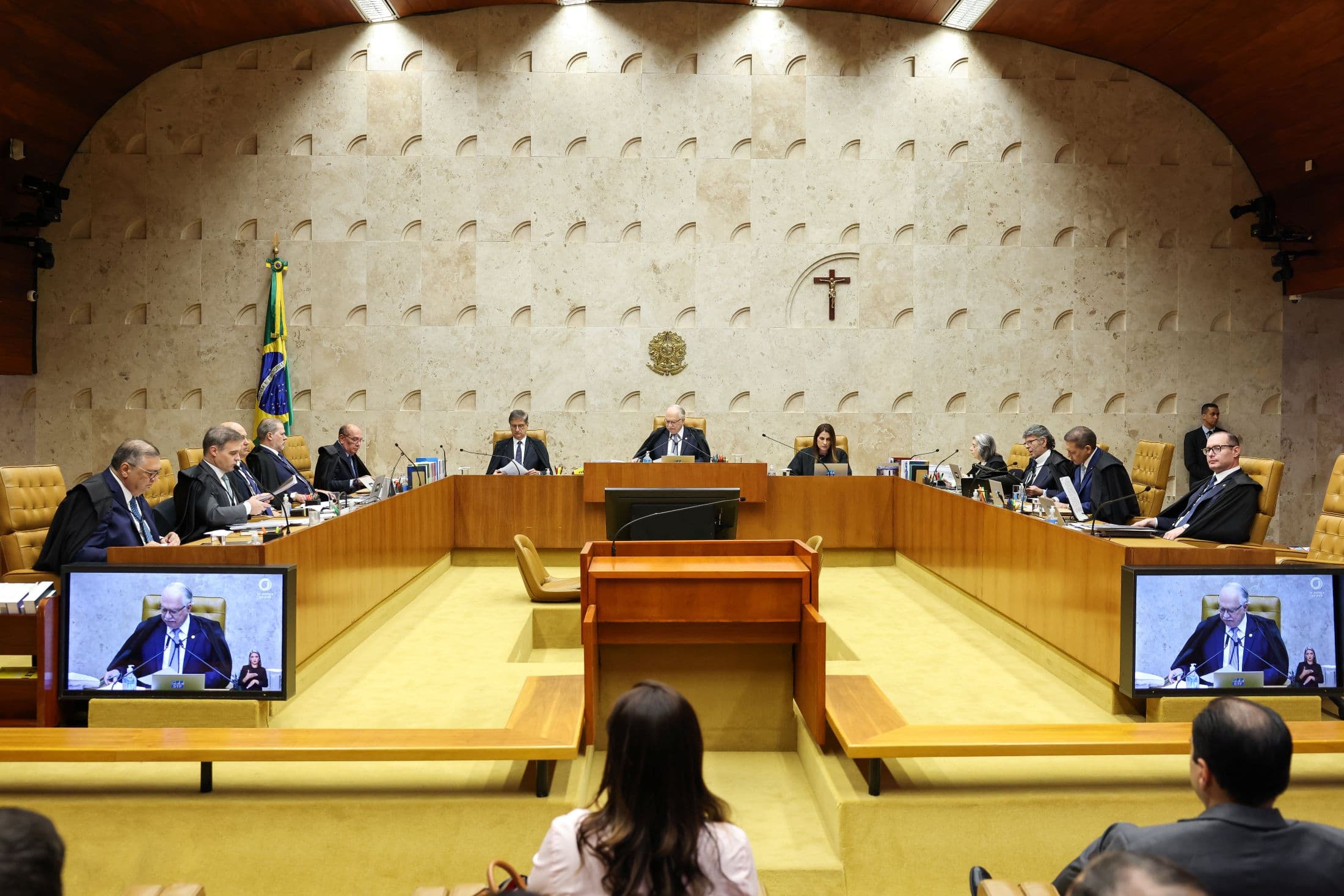
The institutional crisis in the Supremo Tribunal Federal (STF) has stalled the progress of corruption investigations with potential impact on the election. The Master case, which involves politicians, lobbyists, servants and businessmen, is among those most affected by the court’s decision-making paralysis. Since the last phase of the operation, no new stage has been deflated, despite the volume of material seized.
According to sources familiar with the calculations, only the material already collected could sustain 60 new phases of the operation. The estimate was revealed by the Gazeta do Povo in July and indicates the size of the accumulated collection. However, the investigative fronts remain open, but without public advances.
Fachin centralizes cases and suspends shipments
One of the explanations for the shutdown is the crisis in the STF. The President of the Court, Edson Fachin, ordered that the Minister André Mendonça refer to him the cases Master and INSS. With this, the Federal Police temporarily suspended the sending of new requests to carry out operations.
The result is a scenario in which investigations remain formally open, but steps potentially capable of producing new public facts accumulate for after the first round of elections. The Fachin measure has generated a stalemate that directly hits the pace of the countdowns.
The CPI of the Master case is without progress
In the Senate, the attempt to create a CPI to investigate the Master case also runs into obstacles. The application was submitted on March 9 and received 41 signatures, exceeding the 27 required. The commission intended to investigate especially possible relations between ministers Alexandre de Moraes and Dias Toffoli with Daniel Vorcaro.
Senator Alessandro Vieira, the petitioner, brought the issue to STF after the inertia of Senate President Davi Alcolumbre. Minister Cristiano Zanin denied the injunction, but did not end the discussion. He considered that there were not enough elements to prove unconstitutional omission and determined that Alcolumbre provide information before a new analysis.
In practice, however, the decision maintains the ICC without immediate progress. The application had been halted for almost six months when the matter reached the Supreme Court. With the injunction denied, no immediate new decision should be taken.
Request for View interrupts discussion
The discussion on the report of the Master and INSS cases was interrupted by request for a view of Flávio Dino. The minister had suggested, together with Gilmar Mendes, that the two petitions be brought together and that there be a draw for a new rapporteur. This indecision scenario did not only affect the investigations of ministers of STF, but all the other findings of the Master case.
They involve politicians, lobbyists, servants and businessmen and continue formally under the Mendonça report. The amount of information accumulated also helps to scale what may still emerge from the investigation. In September, STF released about 25.3 GB of documents, audios and videos related to the Master case.
Unleashed Collection Reveals Volume of Data
The material is distributed in 15 procedures. Among them are surveys 5.026 and 5.035, which concentrate relevant fronts of the investigation. Surveys on the publicly available collection indicate thousands of files already available. Two of the procedures released, for example, concentrate more than 2,000 documents.
At the same time, about 160 documents related to ongoing diligences remain protected by secrecy. It is precisely in the sections that remain closed that there may be information about unfinished diligences, breaches of secrecy, bank and tax data and other elements whose early disclosure could compromise the investigations.
Oitives are postponed until after the election
The calendar of the hearings also contributes to pushing the production of new elements for after the election. One of the hearings deals with suspicions involving the operations between Banco Master and Banco de Brasília (BRB). The other is related to the so-called “Crowd”, a structure that, according to the investigation, was used to monitor people, obtain confidential information and pressure opponents.
The new date tends to overtake the first round, set for October 4. The defense maintains that Vorcaro has an interest in giving the testimonies, but needs to know in advance the elements of the investigation. The argument is related to Binding Summum 14 of STF, which ensures the defense access to the evidence already documented and relevant to the exercise of the defense.
At the time of the publication of this report, a new date for the testimonies has not been disclosed. In parallel, the defenses of Vorcaro and his allies sent petitions not to Mendonça, but to Fachin for prisons to be reviewed. The impasse remains unresolved, and the investigations continue in a state of waiting.
Read Also
Aline Sleutjes highlights the strength of agriculture in a meeting with entrepreneurs at ACIPG
Quaest: 7 states already have a likely winner in the first round
Elections 2026 can exchange 8 councilors in Ponta Grossa; see alternates
Font
www.gazetadopovo.com