After Suspension by TCE, Paraná Announces Possible Cancellation of R$ 581 Million Olho Vivo Tender
Contract to Expand Intelligent Video Monitoring Platform Was Questioned for Risks of Overpricing, Data Protection and Possible Violations of Fundamental Rights; Public Prosecutor Also Investigates the Program

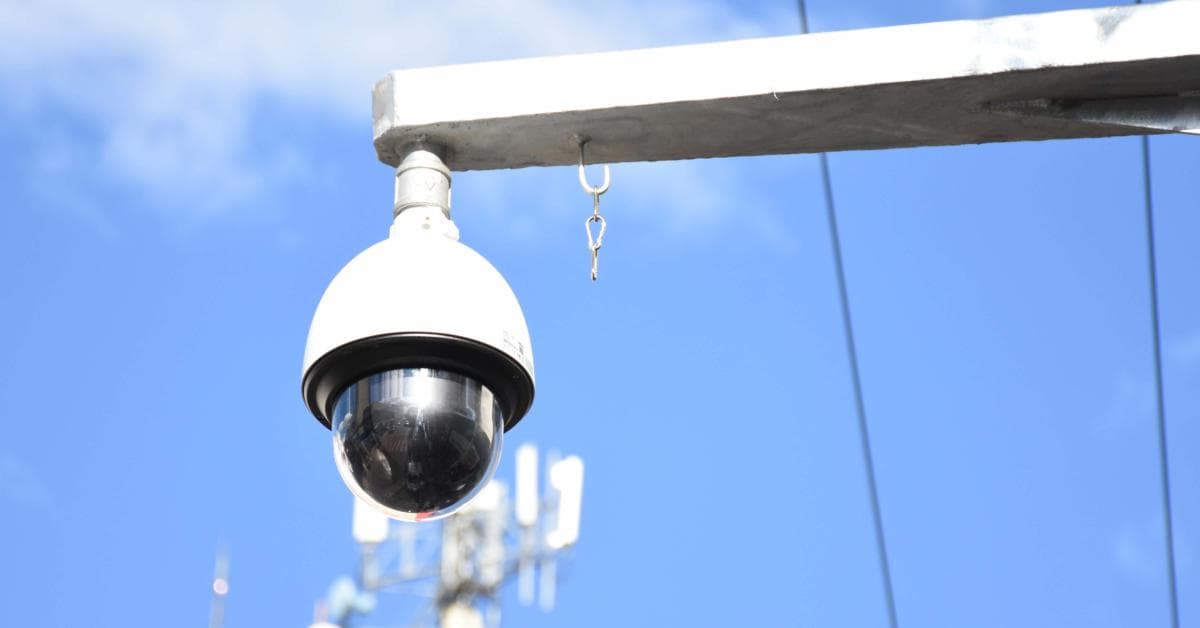
The Government of Paraná announced its intention to revoke an estimated tender of R$ 580.9 million for the hiring of an intelligent video monitoring platform linked to the Olho Vivo program. The procedure had been suspended in April by the State Court of Accounts of Paraná (TCE-PR), after the identification of possible irregularities involving costs, protection of personal data and the structure of hiring.
The new movement appears in the Official Gazette of September 17, 2026. The General Superintendence of Governance of Services and Data (SGSD), linked to Casa Civil, published a notice of intention to revoke the Electronic Pregão no 203/2026, aimed at hiring an integrated technological solution for the state video monitoring platform.
Read also: TCE-PR Olho Vivo’s edict bar highlights problems in planning and costs
The document informs that the decision was motivated by reasons of public interest arising from supervening facts, but does not provide details on what events led the State Government to propose the closure of the procedure. The publication also lays down a period of five working days for any interested parties to make a statement before the final decision on the revocation.
The notice represents a new development of a case that had already been halted by the Court of Auditors in April this year.
TCE suspended tender of almost R$ 581 million
In April, the TCE-PR determined the precautionary suspension of the Electronic Pregão no 203/2026, whose maximum estimated value was R$ 580,951,440.00 for a period of 60 months.
The contract included an integrated smart video monitoring platform, with technologies for facial recognition, automatic reading of cards and cross-reference of information from different databases.
The project also contemplated the deployment of Strategic Intelligence Centers in Curitiba and eight other Paraná pole cities. The suspension was determined by the councillor Fernando Augusto Mello Guimarães, after analysis of a representation presented by the Fourth Inspectorate of External Control of the Court.
The auditors identified six sets of weaknesses in the procedure, involving the protection of personal data, the technical justification for the hiring, the estimated costs, the tender modality used, the possible overlap of existing systems and the rules of subcontracting.
The measure prevented the holding of the public session that was scheduled for April 8.
Suspicion of overprice and differences in costs
One of the main questions presented by the Court of Auditors involved the financial planning of the hiring. According to the technical analysis, the notice presented weaknesses in the definition of equipment quantities and in the methodology used to calculate the estimated values.
The TCE also identified discrepancies between documents that made up the bidding process, especially in relation to the number of cameras that would be integrated into the platform. Another point highlighted by the auditors was the comparison between the costs of the intended cloud operation solution by Paraná and the values of a similar service contracted for the Smart Sampa project by São Paulo.
According to the report, the estimated cost of one of the services related to Olho Vivo was R$ 8.7 million, while the service used as a reference in Smart Sampa had a cost of R$ 950,000. The Court pointed out the need to justify the differences in values and to technically detail the solution sought.
The existence of overprice evidence, however, does not mean that irregular payment or damage to public coffers has been proven. The analysis involved a hiring that had not yet been completed.
Facial recognition and data protection were also questioned
In addition to the costs, the Court of Auditors raised concerns related to the processing of personal data by the artificial intelligence system. The technology foreseen in the tender would allow not only to identify vehicles and recognize faces, but also to analyze certain patterns of human behavior.
According to the auditors, one of the functionalities presented the possibility of classifying as suspicious the prolonged stay of people in certain areas. The ECA considered that this type of tool requires specific care to avoid discriminatory approaches and possible violations of fundamental rights.
Another questioned point was the possibility of false positives generated by recognition systems, especially when there is no adequate human review. The analysis also pointed to the need to establish clearer rules on the storage, sharing and use of the information collected.
The auditors expressed concern about the possibility of data and metadata being used by private companies for purposes other than those originally provided for in the hiring. These risks were presented as grounds for the preventive suspension of the tender, and not as proof that all these situations occurred in the operation of the program.
Public Prosecutor’s Office also opened investigation into the Living Eye
The questions concerning the programme are not restricted to the Court of Auditors. In September, the Public Prosecutor’s Office of Paraná (MP-PR) turned into a civil inquiry an investigation into possible irregularities related to the processing of personal data in Olho Vivo.
According to a report published by the Gazeta do Paraná on September 16, the procedure no. 0046.26.033611-3 began as an investigation on September 1, at the 4th Public Heritage Protection Prosecutor’s Office of Justice of Curitiba.
The investigation seeks to clarify possible breaches of personal data, especially information considered sensitive. Among the points examined are the functioning of the platform, the participation of private companies and the mechanisms used to protect the information processed by the public security system.
The Secretariat of State for Public Security is formally represented in the procedure. The opening of the investigation does not mean that the Public Prosecutor’s Office has confirmed leakage of information or responsibility of public officials and companies.
Participation of private companies is investigated
The participation of technology companies in the structure of the program also came to be questioned. In representation before the Court of Auditors, the state deputy Arilson Chiorato (PT) raised doubts about the treatment of public security data by private companies and the existence of specific hiring for the execution of services.
Among the companies mentioned in the surveys are Google, a provider of cloud computing infrastructure, and Paladium Corp, related to the development of technological solutions.
In a report published by Folha de S.Paulo in April, the Government of Paraná stated that the program had been structured in accordance with the legislation and that it was providing the clarifications requested by the Court of Auditors. In July, the Gazeta do Paraná reported that the TCE-PR had determined the continuity of the diligences to clarify the participation of private companies in the development and operation of the platform.
Among the points that still depended on clarifications were the definition of the technological architecture, the operational control of the system and the division of responsibilities between the public power and the companies involved. At that time, the Court had not yet presented a definitive conclusion on the regularity of the project.
Government of Paraná defends security program
Despite the questions about the tender, the State Government maintains the Olho Vivo program as part of its public security strategy. Launched in December 2025, the new phase of the project received an announcement of investments of R$ 400 million to expand the use of smart cameras and artificial intelligence tools.
The state planning provided for the expansion of the monitoring network to the 399 municipalities of Paraná.
According to the government, the technology allows to identify stolen or stolen vehicles, locate wanted people and assist the police forces in the clarification of crimes. The Executive also maintains that the system uses information security tools and that artificial intelligence functions as support to police work, without replacing the performance of public agents.
In a demonstration released by Folha de S.Paulo in April, the State defended the legality of the structuring of the program and reported that it was providing clarifications to the Court of Auditors.
What happens to the Live Eye in Ponta Grossa?
The Live Eye program is already present in Ponta Grossa, a municipality that integrates the state planning of expansion of the video monitoring system. In February 2026, the State Secretariat for Public Security reported that the program had reached the mark of 1,012 cameras installed in 22 municipalities in Paraná.
At the time, Ponta Grossa was close to reaching 80% of the amount of equipment expected for that stage of deployment. The possible revocation of the bid of R$ 581 million does not mean that the cameras of Olho Vivo installed in Ponta Grossa will be turned off.
In determining the suspension of the hearing, the Court of Auditors clarified that the measure exclusively affected that bidding procedure, without interrupting the services already performed by the State Secretariat for Public Security. The ECA pointed out that the existing operations use infrastructure and previous contracts, which did not constitute the subject of the representation responsible for the suspension of the pleading.
The eventual revocation, therefore, must be differentiated from the operation of the already installed cameras. It is still necessary to clarify how the decision may affect the future expansion of the platform and the integration of new equipment in Ponta Grossa and other municipalities of Campos Gerais.
What happens now?
With the publication of the intention to revoke, the Government of Paraná opened a deadline for the expression of those interested in the bidding procedure. The notice published on September 17 does not detail whether the State intends to draw up a new notice, modify the technical specifications of the platform or adopt another solution for the expansion of the program.
It also does not inform what supervening facts motivated the intention to revoke the hiring.
The suspension determined by the Court of Auditors and the investigations related to the program are documented facts, but the notice of the Official Journal does not expressly state that these procedures were the cause of the administrative decision.
While the bidding situation remains pending definition, Olho Vivo continues to be used in public safety operations that were already deployed in the Paraná.