End of 6x1 shift schedule: see if your professional will be affected or not by the change
Proposed by the Senate, the bill provides for two days of rest and a weekly work schedule of up to 40 hours; continuous services may have differentiated schedules

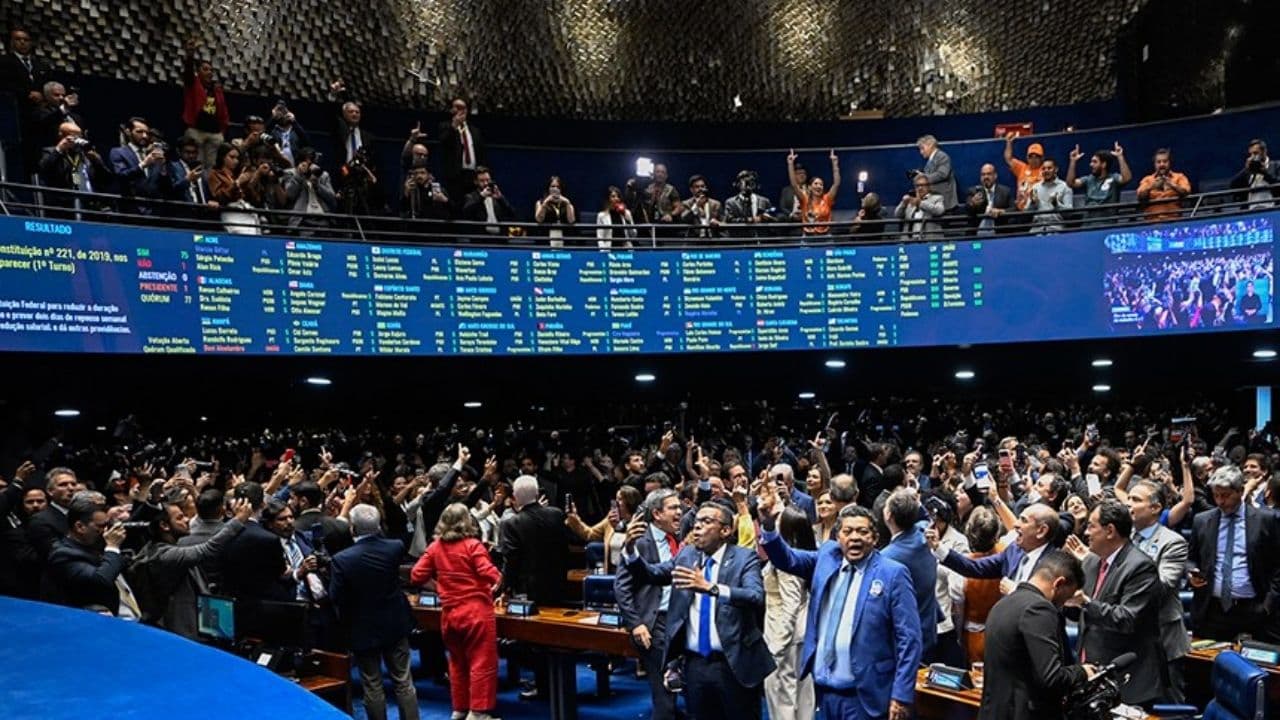
The end of the 6x1 scale will alter the routine of workers who complete six days of service to take a break, but the change may occur in different ways depending on the activity. The text approved by the Senate provides for two days of paid rest and a gradual reduction of the maximum weekly work from 44 to 40 hours, without salary cuts. The proposal is for promulgation.
The approval of PEC 221/2019 took place on Wednesday night (14), in two rounds, with 75 votes in favour and one against in each vote. As the proposal has already passed through the Chamber of Deputies, it does not depend on the sanction of the President of the Republic.
Who will be affected by the change
The change mainly reaches employees who now work six days a week or have contracts with loads of more than 40 hours per week. The reduction could also affect those who already work from Monday to Friday, but distributes the current 44 hours in those five days.
According to the g1 report sent to the BnT, data from the Ministry of Labour and Employment show that 14.8 million workers hired by CLT operate on the 6x1 scale in Brazil.
The impact, however, will not be the same for all categories. Professionals who already have shorter hours, established by specific legislation, may have few changes in the amount of hours worked.
This is the case of certain banking functions, with a 30-hour weekly journey, and of teleservice, which has a 36-hour limit. For these activities, the organization of the breaks is one of the points that need to be observed.
Health, safety and transportation may have special stopovers
The end of the 6x1 scale does not mean that hospitals, transport companies or security services will only have to operate from Monday to Friday. According to the material submitted, activities that need to maintain continuous attention can organize days and breaks through specific regimes, respecting the applicable rules and collective bargaining conditions.
End of scale 6×1: do you think the trade of Ponta Grossa will break?
The sectors include health, safety, transport, urban cleaning, ordinance and surveillance. The maintenance of workstations, including in the 12x36 model, will depend on the conditions foreseen for each regime. To have a differentiated scale does not mean to exclude the worker from the rights provided for in the change. The distribution of the hours and periods of rest may be adapted to the characteristics of the service.
Self-employed and unrelated providers have another situation
Those who act on their own account or provide services as a legal person, without employment ties, do not automatically have limited hours and paid leave by the rules intended for employees. In this group are autonomous, MEIs and other independent providers. The situation depends on the effective working relationship: the absence of a signed wallet, by itself, does not eliminate any rights of those who act as employees.
When the journey is shortened
The transition will take place in stages. After two months of promulgation, the weekly limit will go from 44 to 42 hours. One year after this first reduction, it will reach 40 hours, completing a 14-month adaptation period. The text establishes two days of paid weekly rest, one of which is preferably on Sundays. This does not represent a guarantee of fixed leave on Saturdays and Sundays for all categories.