Justice denies suspension of trains in PR; process cites impact on connection with Ponta Grossa
State requests deactivation of Rio Branco do Sul branch due to accidents and noise pollution; decision points to need for studies on economic, environmental and logistical consequences

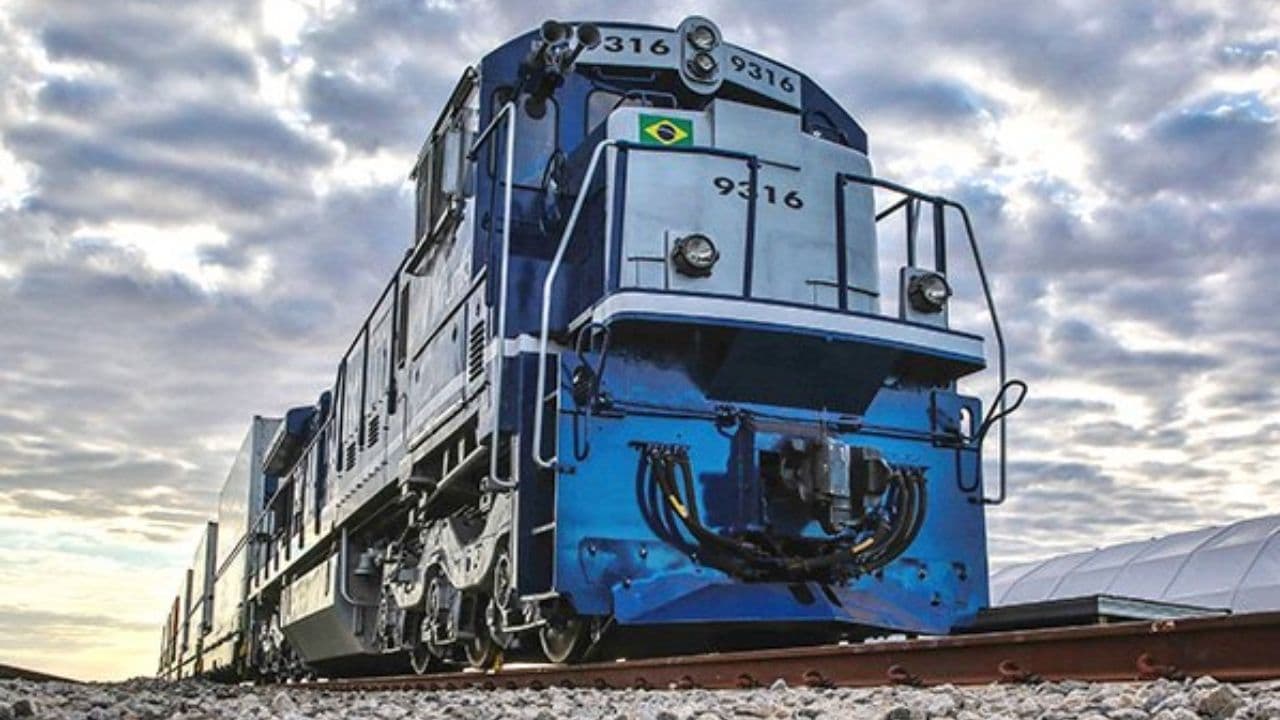
The Justiça Federal denied the request of the Government of the Paraná to immediately suspend the circulation of freight trains on the Rio Branco Southern Railway Branch in the Metropolitan Region of Curitiba. The decision, signed on September 25 by Judge Friedmann Anderson Wendpap of the 1st Federal Court of Curitiba, considers it necessary to deepen the studies on the effects of the interruption. Among the arguments presented in the process is the possible increase of trucks in the connection between Curitiba and Ponta Grossa.
The public civil action was proposed by the State against the Union, the National Terrestrial Transport Agency (ANTT) and Rumo Malha Sul. In addition to the immediate stoppage of the trains, the state government asks for the definitive deactivation and return of the stretch, accompanied by a plan to allocate the domain and avoid urban and environmental problems.
The decision deals with the urgency request. The final judgment on the deactivation of the branch has not been closed.
Where Ponta Grossa appears in the process
Ponta Grossa is mentioned in a demonstration of the South Rio Branco Prefecture, contrary to the immediate suspension of the railway operation. The municipality argues that the transfer of loads from the railroads to the highways could increase congestion and accident risks.
“The State of Paraná also did not foresee the increase of trucks on the other highway already criticized for its congestion and fatal accidents: the connection between Curitiba and Ponta Grossa,” the demonstration said. The city also points to possible effects on PR-092 and the Contorno Norte of Curitiba. According to the municipality, the withdrawal of the trains would displace part of the transport problems to other cities and road corridors.
Read also: Sandro Alex promises to expand women's health and regularize housing in Paraná
The document does not quantify how many additional trucks would circulate in the connection with Ponta Grossa. The alert integrates the arguments presented by the city hall to maintain rail traffic while studies are carried out.
State points to accidents and noise pollution
The Government of Paraná bases the request on the risks faced by residents of urban areas crossed by the railway. The North Branch passes through Curitiba, Almirante Tamandaré, Itaperuçu and Rio Branco do Sul.
According to the data presented by the State and reproduced in the decision, the North Branch reportedly recorded 152 accidents between 2021 and 2024, with more than 60 injured and 27 dead. The government also cites more than 80 level crossings, as well as clandestine crossings opened by the population.
Another argument is the noise pollution caused by horns and the circulation of compositions, even at night. The action highlights the impacts on the elderly, bedridden people, children and people with Autism Spectrum Disorder.
The State also maintains that the section has low use, with two trains daily, and that there would be alternatives to transport the loads by highways or by transhipment operations. The ANTT, however, contested the integral correspondence of the numbers of accidents presented with the specific historical series of the sub-branches. For the agency, the assessment requires identifying the causes, the locations of the occurrences and the possible security measures.
Why the court denied the suspension
In the decision, Wendpap recognized the relevance of protection to life and the safety of the population, but pointed to doubts about the simplicity of the solution proposed by the State. The magistrate considered that the conflict was built over decades, with the growth of cities around the railway, and that the interruption requires an analysis of the consequences for different sectors.
Among the effects discussed are the transfer of cargoes to trucks, the increase in logistical costs, the pressure on roads and possible environmental impacts. “Thus, the technical complexity of the matter and the lapse of time made it advisable to deepen the instruction, which is why I reject the request for urgent tutelage,” the judge recorded.
The decision also reproduces ANTT’s position that it is not possible to anticipate the operational, economic and contractual effects of the change without studies on demand, transport alternatives, infrastructure and necessary investments.
Documents point to increased costs for the industry
The City of Rio Branco do Sul states that the branch has importance for the drainage of cement and limestone, with reflections in the construction and agribusiness of Paraná.
In the demonstration, the municipality cites almost 900,000 tons of cement annually and another 150,000 tons of limestone. It also mentions the supply of regions such as Londrina, Maringá and Cascavel.
In a document attached to the process, Votorantim Cimentos estimates that a compulsory migration for road transport would increase its annual transportation costs by R$ 52 million. According to the company, this increase would be passed on to the price of cement and would affect the competitiveness of the industrial unit.
The Federation of State Industries of Paraná (Fiep) also opposed the immediate interruption. The entity argues that the effects would reach consumers, public and private works, in addition to the conservation of highways.
Ministry foresees continuity of the branch
The demonstrations of the Ministry of Transportation attached to the process, produced in August, point out that the branch remains contemplated in the studies of the future concession of the South Mesh.
The modeling considers a segment of 50.628 kilometers between Pinhais and Rio Branco do Sul, part of the Corridor Paraná–Santa Catarina, with projected demand of approximately 1.6 million gross tons trafficked and 836,000 useful tons. Loads include cement, clinker, corrective limestone and fertilizer.
The studies provide for the maintenance of the rails, the complete replacement of the sleepers by new pieces of wood, the recomposition of the upper layer of ballast and services of leveling, alignment and stabilization of the track. Recurring maintenance investments are also planned.
In Letter No. 916/2026, signed on August 28, the national Secretary of Railway Transport, Leonardo Cezar Ribeiro, reported that the technical elements available at that time did not allow recommending the deactivation.
The railroad is considered an alternative
The Ministry's documentation also presents the Curitiba Railway Outline as an alternative to reduce conflicts between trains and urban areas. According to the technical note of August, the National Department of Transport Infrastructure (DNIT) conducted a tender to hire the basic project of the enterprise.
The West Branch of the contour seeks to reduce road, environmental and operational conflicts in Curitiba, Almirante Tamandaré, Itaperuçu and Rio Branco of the South. The Ministry reported that it was evaluating the possibility of incorporating the investment into the future concession, subject to the technical, economic and legal feasibility and the financial balance mechanisms of the contract.
Alternatives such as automatic gates, active signaling, electronic monitoring, monitoring of irregular crossings, speed reduction and acoustic barriers were also presented in the process.
Process will involve entities and companies
The Federal Public Prosecutor’s Office spoke in favor of the urgent request. Curitiba defended that the withdrawal of the cargo trains of the North Branch be considered in the new concession, while Almirante Tamandaré asked for further studies before a decision.
Rumo said in the process that it operates with an average speed of 12 km/h and frequency of two trains per day. The licensee also argued that the interruption involves contractual obligations and users of the service. In addition to denying the immediate suspension, the judge admitted the participation of Fiep as a technical collaborator of the process and determined the inclusion of the Public Prosecutor of Paraná as a third party interested, to inform if it intends to follow the action.
The magistrate also requested from Rumo the qualification data of Votorantim Cementos and the Santa Terezinha plant, to enable their inclusion in the process, and consulted the parties on the interest in negotiating an agreement.