Learn to make homemade tomato sauce without a can
Preparing tomato sauce at home is easier than it seems. With common ingredients and a slow cooking process, it's possible to achieve a thick and flavorful sauce, without additives. The recipe includes carrot and leek, which help balance the acidity and add creaminess.

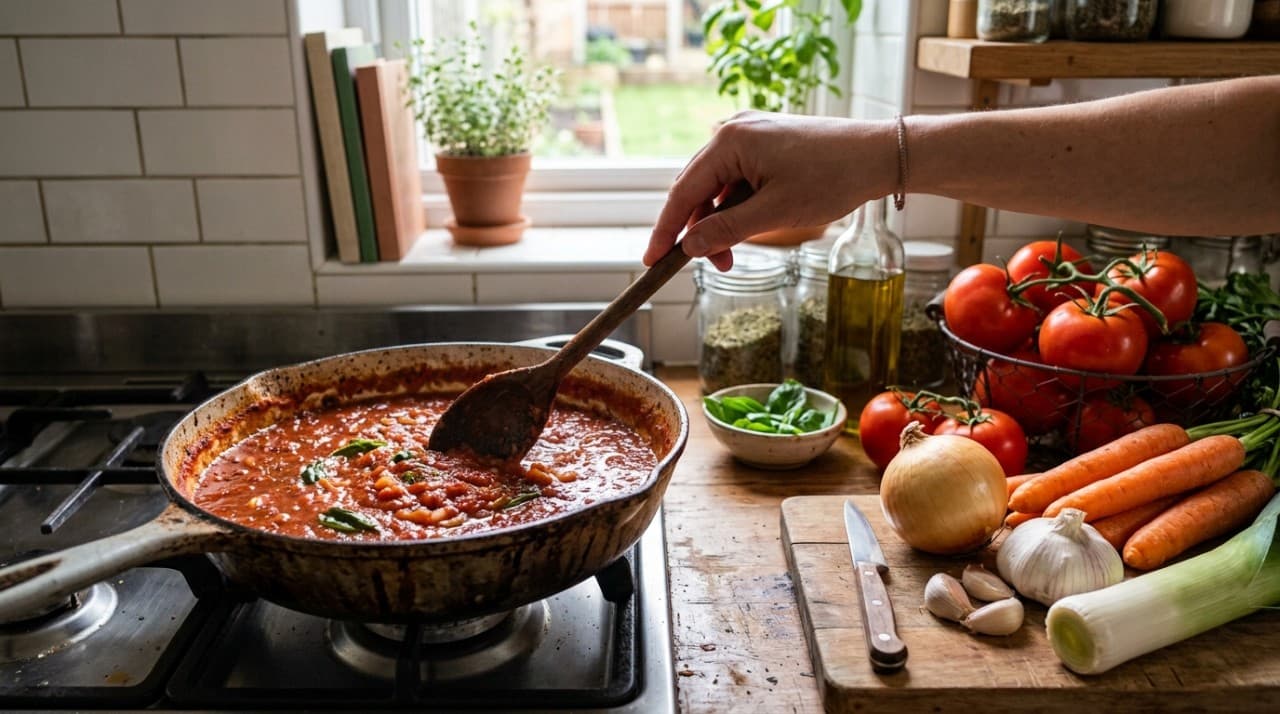
Those looking for a healthier and tastier alternative to industrialized tomato sauce can prepare their own version at home, with simple ingredients and a process that requires only patience. The recipe, which takes fresh tomatoes, carrots and leeks, yields a full-bodied and versatile sauce, ideal for pasta, pizza and other preparations. The preparation takes about an hour, but the result pays off.
Common Ingredients and Function of Each
The base can be simple and made with common kitchen foods. Ripe tomatoes give more flavor, while carrots help to naturally balance acidity without relying on too much sugar. Leek serves another function: it adds a soft flavor and leaves the mixture more creamy without the need to use cream, flour or other thickeners. These three ingredients, combined with garlic, onion and olive oil, form the structure of the sauce.
The carrot releases natural sweetness during cooking and helps to soften the acidity of the tomato. This reduces the need to correct the taste with sugar at the end, in addition to contributing to a more full-bodied texture after the sauce is ground. Thus, the sauce gains body without the addition of artificial thickeners.
Step by step preparation
Start by chopping garlic, onion and leek. Cut the carrots into small pieces so that they cook at the same pace as the other ingredients. Heat a little olive oil in a pan and sauté first the garlic and onion, without burning. When they are soft, add the leek and carrot. This initial sauté creates an aromatic base that will be much more noticeable after the tomato cuts.
The tomatoes enter after the base vegetables have already started to soften. They should be well washed, without the peduncle and cut into pieces. It is not necessary to look for perfect cuts because everything will be shredded in the end. After adding the tomatoes, add the salt and mix. Cover the pot and cook over medium heat for approximately 45 to 60 minutes. This time allows the vegetables to soften and some of the water to evaporate.
Why cook for so long?
Fresh tomatoes have plenty of water. If the preparation is interrupted too early, the result may become drained and taste little concentrated. The prolonged cooking reduces this water and integrates the flavor of vegetables. During cooking, stir occasionally to prevent the bottom from burning; observe if there is still enough liquid in the pan; let the vegetables be completely soft; and uncork in the final minutes if you want a more concentrated texture.
Is sugar really necessary?
No, no, no. The need depends mainly on the tomatoes used. Ripe and naturally sweet fruits can produce a balanced sauce without any sugar. Carrots also help reduce the perception of acidity. The best thing is to prove it only at the end. If the sauce remains too acidic, a small pinch may be enough. Putting too much sugar transforms the taste and can just mask the freshness of the tomato.
How to Get the Ideal Texture
When all the ingredients are completely soft, beat the mixture with a mixer, blender or other suitable processor. Those who prefer a very fine texture can pass the result through a sieve afterwards. For a more rustic sauce, just grind less. For delicate doughs, pizzas or preparations in which a uniform surface is desired, it is worth processing for longer until the larger pieces are eliminated.
Alternatives to fresh tomatoes
Oh, yes, yes. Canned peeled whole tomatoes can be a practical alternative when the fresh tomatoes available are tasteless or off-season. Crushed tomatoes also work, as long as the list of ingredients is simple. The difference is that fresh tomatoes usually require more pot time because they contain more water. Concentrated products can achieve the desired texture faster.
How to store the sauce
If not to be consumed immediately, let the sauce cool and store in a clean, tightly closed container in the refrigerator. For longer periods, freezing in small portions makes it easy to withdraw only the amount needed for each recipe. Thus, it is possible to have homemade sauce always on hand, without resorting to the tin versions.
With this recipe, the reader can abandon the industrialized sauce and enjoy a fresh product, natural and full of flavor. Try it at home and share the result on the social networks of the Boca no Trombone Portal.
Read Also
Zucchini sticks on air fryer: crispy recipe
Font
catracalivre.com
Ripe tomatoes (en.wikipedia.org)