Roasted nuts on aluminum foil: technique prevents burns
Baking nuts on aluminum foil is a simple technique that prevents burns and ensures even cooking. The method uses steam to maintain moisture and can be adapted for salty or sweet versions.

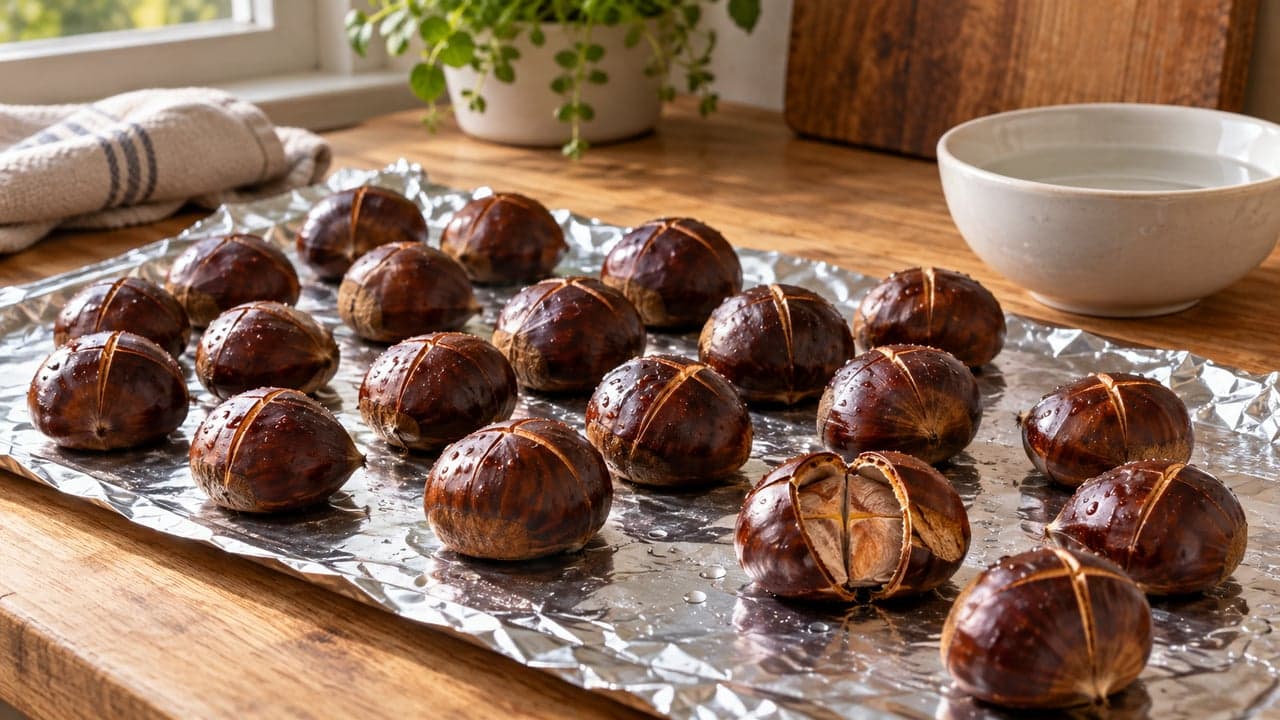
Baking chestnuts in the oven can result in burnt spots, especially on household appliances with strong resistance or uneven temperature. A practical solution is to use aluminum foil to create a closed package, similar to a papillote, that retains some of the moisture released by the food. This technique reduces the risk of burns before the interior cooks completely.
The method is simple and can be applied at home, without special equipment. Just follow some basic preparation and assembly steps. Next, see how to make chestnuts with aluminum foil easily and efficiently.
Preparation begins before the oven
The first step is to wash the fruits to remove dust and discard withered or holed units. Then make a cut on the bark, cross or in a single butcher. This cut needs to pass through the inner skin, but without breaking the pulp.
Then let the chestnuts soak in cold or warm water for 15 to 30 minutes. This process helps in hydration and even cooking. When draining, do not completely dry: residual moisture contributes to the formation of steam inside the package.
For a consistent result, use fruits of similar size in the same package. Everyone cooks at the same pace. With the preparation completed, it is time to assemble the aluminum packages.
Aluminum package assembly
Preheat the oven to 180°C, with heat on top and under. In the meantime, involve small groups of chestnuts, with 20 to 30 units in single layer. Close the edges firmly, but leave an internal space for circular steam.
If the package gets tight, part of the fruit cooks crushed and loses that loose crumb. Therefore, avoid overloading the aluminum. The circulation of steam is essential for a uniform cooking.
With the packages ready, bring them to the central oven grill for about 30 minutes. This time may vary depending on the size of the chestnuts and the power of the oven.
How to know the right point
To check the point, open one of the packages carefully and spit with a fork or stick. If you enter without hard resistance, you are ready to rest. If there is still stiffness in the center, come back for a few more minutes.
After baking, keep the package closed for 10 minutes out of the heat. This rest allows the steam to finish cooking the interior and makes it easier to loosen the shell. The chestnut should come out moist from the inside, with peel loosening while it is still warm.
The foil favors this point because it holds steam at the beginning of the preparation and prevents the surface from drying too fast. If you want a more roasted aroma, put everything through a hot frying pan for a few minutes.
Versions for all tastes
Roasted chestnuts in aluminum are versatile and can be tempered in various ways. For a warm appetizer, use fine coarse salt and chopped rosemary. To accompany birds, butter, sage and pepper are good options.
In the sweet version, honey, cinnamon and orange zest create a special flavor. For Christmas dinner, a farofa with golden onions and fresh herbs goes well with the dish. The dinner usually has meats, farofa, rice with dried fruits and dense desserts, and the chestnuts come in as a hot snack, accompaniment of poultry or base for purees and fillings.
Regardless of the choice, the aluminum foil technique ensures a more uniform cooking and prevents burns. It is a practical way of preparing chestnuts for various occasions.
For more cooking tips and recipes for the holidays, keep following the Boca no Trombone portal.
Read Also
Perfect fried eggs: change bacon for chicken and spinach
Font
catracalivre.com
Record of its origin and food use (en.wikipedia.org)