Voto útil gains strength between Lula and Flávio in final stretch
Flávio Bolsonaro's campaign intensifies appeal to useful vote against Lula, even though migration between opponents does not change the total votes. Expert explains the psychological and strategic effects of this tactic.

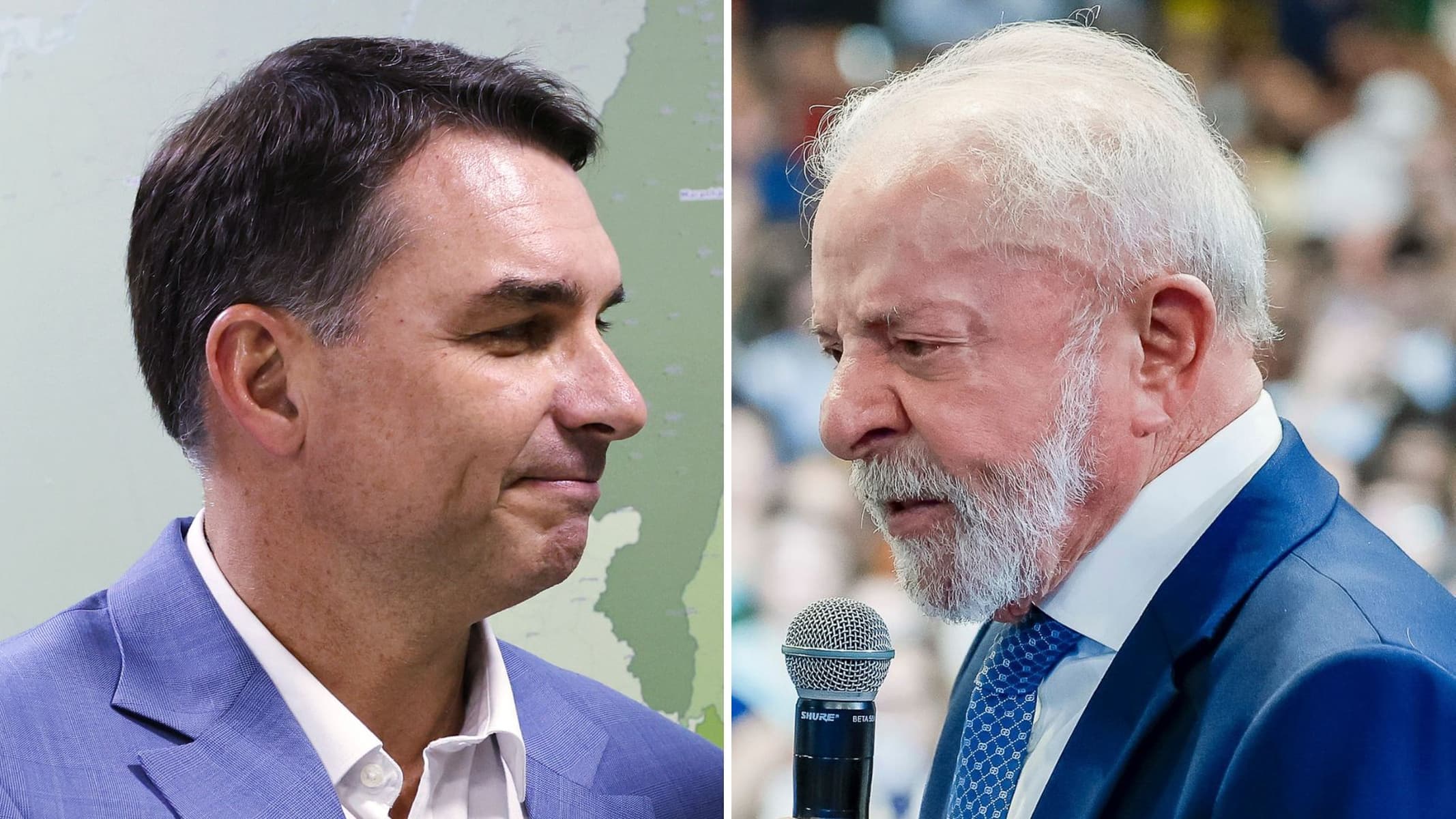
The final straight of the presidential election placed the so-called useful vote at the center of Flávio Bolsonaro’s (PL) strategy against the opponent, Luiz Inácio Lula da Silva (PT). The campaign went on to openly ask voters who have as their first option other opponents of Lula, exploring the perception that the dispute is concentrated between the two first places.
The result shows a favorable oscillation to Flávio in relation to the previous round of the same institute, published on September 1. In that uprising, Lula and Flavio appeared numerically tied in the second round, both with 44%.
Campaign bets on early voting
It is in this scenario that the Flávio Bolsonaro campaign began to encourage the useful vote, openly asking for the vote of voters who have as their first option other opponents of Lula. The campaign also began to explore the perception that the dispute is concentrated between the top two.
"Mathematically, changes among the candidates below do not alter the chance of a second round, but it is quite common for voters to advance the second round vote already in the first round," says Guilherme Russo, director of Intelligence at Quaest.
Two movements under the same name
The director of intelligence at Quaest differentiates two movements that usually end up meeting under the same name. The first occurs when voters abandon candidates with less intention of voting to migrate to the one they see as the main force capable of facing the leader.
In the presidential contest, for example, this could happen if voters of Augusto Cury, Ronaldo Caiado, Renan Santos or Romeu Zema decide to advance the vote on Flávio Bolsonaro. In this scenario, the exchange does not change the sum of the votes of Lula’s opponents, but it can expand Flávio’s advantage over the other names and consolidate him as the president’s main opponent.
Psychological component weighs on decision
There is also a psychological component. “Campanhas do this for two reasons: first, because many people don’t understand that it makes no difference in the chances of the first-placed winner winning; and second, because the anticipation of the vote is a psychological process that gives more weight to the vote,” says Russo.
In practice, the voter can assess that voting on a candidate with little chance of moving forward has less impact than choosing another one that appears competitive in the polls. For campaigns, this behavior also helps to create a show of strength. The greater the distance for the other candidates from the same political field, the greater the possibility that it will consolidate as the main alternative to the opponent.
Mathematics explains why it doesn’t change
To understand why exchanging the vote between opponents of the leader does not reduce his advantage, just analyze a simple statistical account. Imagine an election in which the first place has 40% of the valid votes and all his opponents, added up, have 60%. Although there is a large migration among the names behind, the internal division of the 60% changes, but the first place remains with the same 40%.
For president and governor, wins in the first round who obtains an absolute majority of the valid votes. If no one reaches this level, the two most voted candidates will contest the second round. White and null are out of this calculation. That is why, from the statistical point of view, there is no need to concentrate votes on a single opponent just to ensure the realization of the second stage.
When the migration changes the scenario
The situation changes when the voter stops voting on an opponent to choose the leader or when someone who intended to vote blank, annul or not appear decides to vote on a candidate. In such cases, the relationship between the valid votes actually changes.
If migration between opponents does not necessarily change the realization of the second round, it can be decisive in defining who will be in it. “There is a strategy to alter the outcome of the first round, in addition to a psychological effect,” says the director of intelligence at Quaest.
Surveys guide the useful vote
The surveys also help campaigns identify candidates with more space to receive this type of vote. According to Russo, a combination of low knowledge, low rejection and growth trajectory may indicate potential to advance on the final straight. The stagnant candidates tend to have less room to attract voters who start to consider competitiveness when deciding the vote.
“A candidate who has been growing in the polls tends to be subject to receive useful vote more than a candidate who is stagnant,” he says. The source did not detail which candidates fit into this profile in the current dispute.
The useful vote, therefore, is a campaign tool that tampers with the voter’s perception and can influence the dynamics of the first round, even without changing the total sum of votes against the leader. For the voters of Ponta Grossa and Campos Gerais, understanding this logic can make a difference when deciding to vote.
Read Also
Meta disables Lula ads on Facebook
Lula Criticizes Bets: Spending What You Don't Have to Win What Doesn't Exist
Elizabeth says PG needs Julio Kuller in Assembly
Font
www.gazetadopovo.com