Museu Viajante brings the history of Dutch immigration to 110 students from Castro
Museu Viajante in Castro brings the history of Dutch immigration to 110 students through theater, storytelling and educational activities

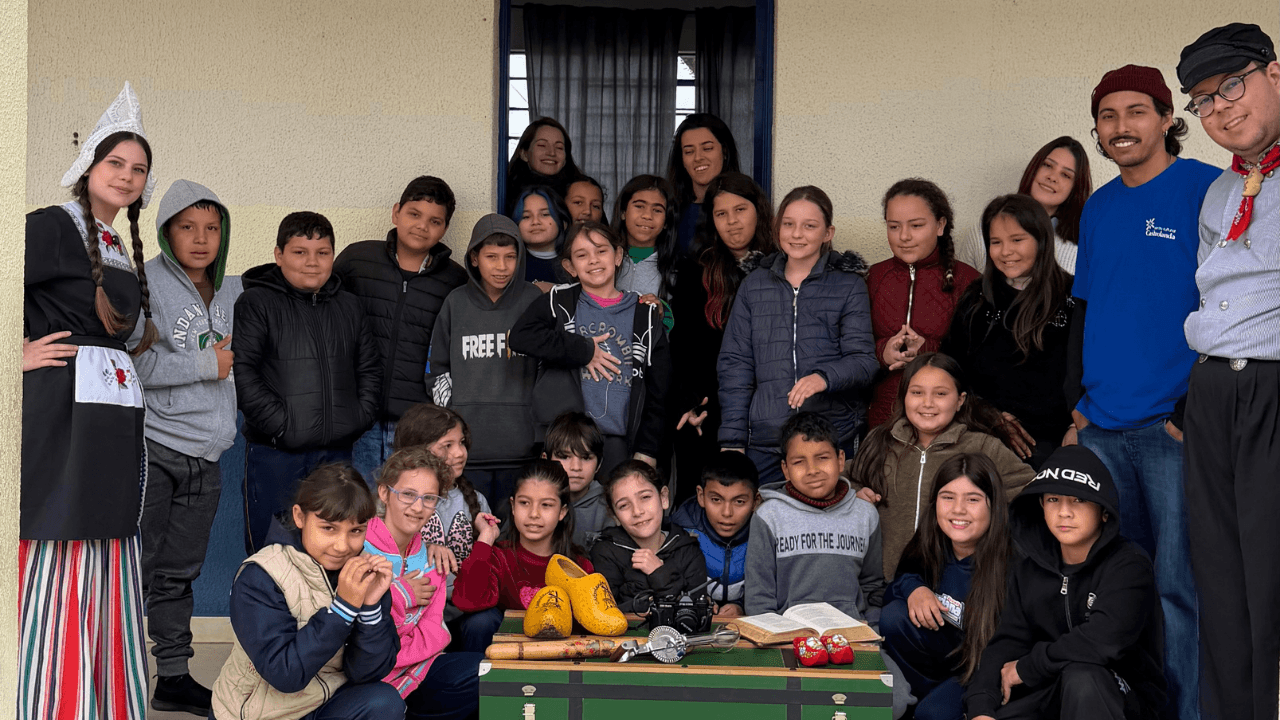
The Castrolanda Cultural Center (CCC) took the history of Dutch immigration to 110 students of the Castro teaching network, in the Campos Gerais, through the project “The Traveling Museum and the Chest of Memories”. The action was held between September 21 and 24, in the schools Vila do Rosário and Mariana Garcez Duarte, as part of the programming of the 20th Spring of Museums, which this year had as theme “Museums for all people”.
The initiative aimed to bring students closer to the historical and cultural heritage of the municipality, bringing educational activities directly to educational institutions. Through theatrical presentations, storytelling and objects from the museum’s collection, the children learned about the trajectory of Dutch families who arrived in the Castrolanda region, including the travel, customs and daily lives of immigrants.
During the activities, fictional characters led the students through a narrative about immigration, allowing the children to interact with the stories and get to know elements that are part of the historical and cultural formation of the community.
Project expands access to culture in schools
According to Sara F. Lazarine, responsible for the educational sector of the Castrolanda Cultural Center, the proposal arose from the need to expand students’ access to cultural activities, especially in the face of transportation difficulties faced by public educational institutions.
“Through theatre and storytelling, children were invited to learn about the trajectory of Dutch immigration to our municipality, dialoguing with fictional characters who narrated this entire journey,” he explains.
The realization of the activities within the schools themselves allowed the students to participate in an educational experience normally offered in the physical space of the museum.
In addition to the presentations, the CCC team used educational pieces from the collection to illustrate aspects of the lives of immigrants, relating the objects presented to the customs and experiences of the families that contributed to the formation of Castrolanda.
To the historian André K. Zan, from the Castrolanda Cultural Center, the objects played an important role in the construction of the narrative and in the involvement of children with the content presented.
“It was an important heritage education action, linking art, theater, memory and the work developed by the CCC team in the promotion and preservation of Castrolanda’s memory,” he emphasizes.
Students create a chest of memories with stories of their own families
At the end of the activities, the students were invited to participate in a dynamic that related the content presented by the museum to their own experiences.
Each child could represent, through drawings or texts, an object that told his personal or family history. The records produced by the students were gathered in a chest of memories, which remained with each class.
The activity sought to encourage reflection on the importance of objects and memories in the preservation of history, showing students that their experiences and those of their families are also part of the collective memory.
With the initiative, the Castrolanda Cultural Center took part of its educational work beyond the museum’s facilities, bringing students closer to the history of Dutch immigration and encouraging the appreciation of Castro’s cultural heritage.