Cooperativism shows how unity can transform communities
Cooperativism strengthens communities, expands opportunities and shows how the union of people can drive economic and social development.

More than a model of economic organization, cooperativism starts from a simple idea: people who unite around a common goal can generate results capable of transforming entire communities.
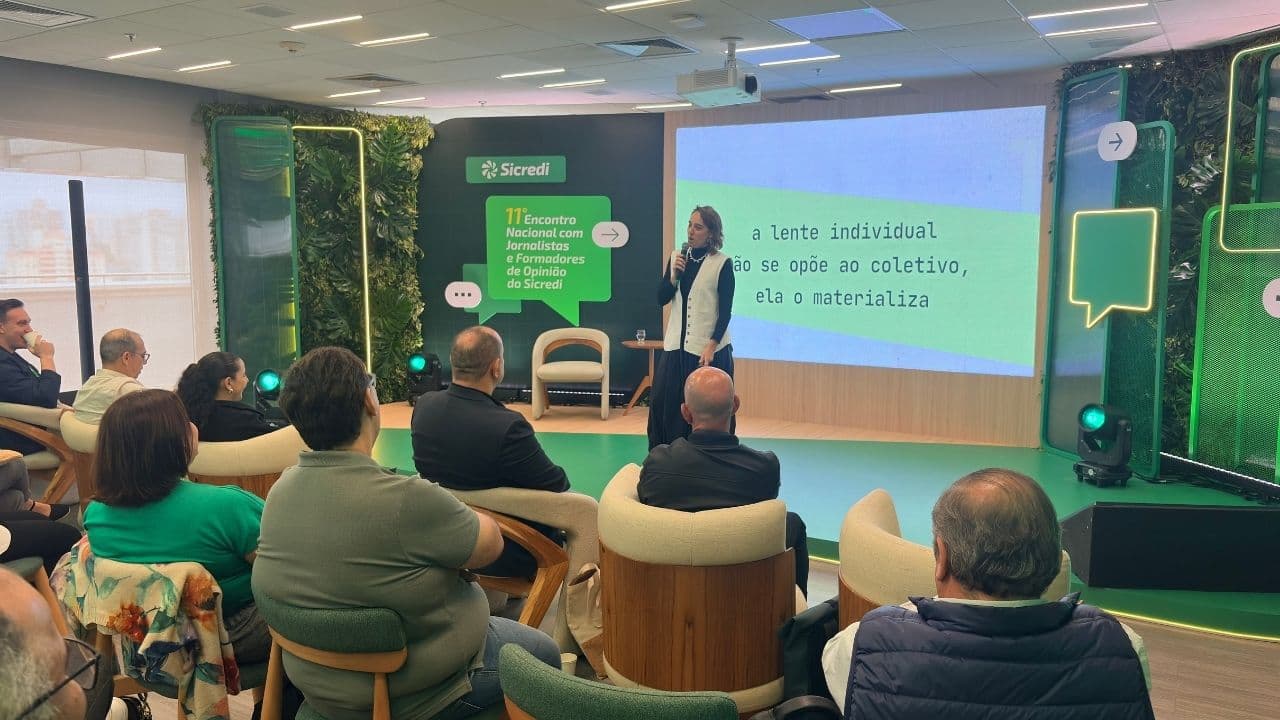
This principle, present at the origin of the cooperative movement, remains current and is reflected in the performance of cooperatives from different sectors throughout Brazil. In the financial system, the model gains its own characteristics by placing the associate at the center of decisions and bringing the institution closer to the economic and social reality of the regions where it is present.
The BnT Online was in Rio Grande do Sul to get to know part of this history and understand how the principles built more than a century ago continue to influence the development of Brazilian communities.
A model built by people
The essence of a cooperative is collective participation. Unlike traditional business models, the cooperative is formed by people who voluntarily associate in search of economic and social objectives in common.
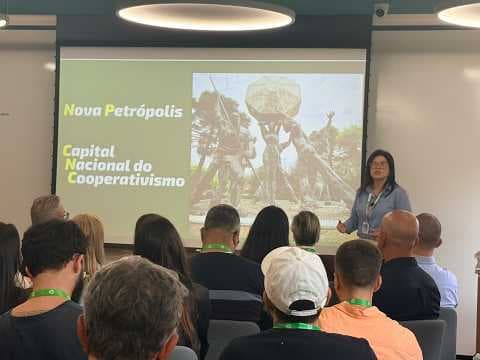
The president of the Nova Petrópolis Cooperative House, Heloísa Helena Lopes, explains that understanding this concept is essential to understanding the importance of cooperativism.
“When we talk about cooperativeness, we need to know what a cooperative is. It is the union of people around a purpose,” he said.
According to her, the action of cooperatives can produce direct impacts in the communities.
“People come together to develop their communities economically and socially. When there is a cooperative, the community transforms,” he said.
Another differential is in the destination of the results obtained. Within cooperativism, part of the financial result can return to the members themselves.
“The profits of a cooperative, which we call leftovers, which is the result, it is shared,” Heloísa explained.
Co-operativeness and development
In different parts of the world, cooperativism has a strong presence in the economy, especially in the financial sector.
The president of Sicredi Pioneira, Tiago Schmidt, evaluates that Brazil still has significant space to expand knowledge about the functioning of cooperatives and the impact they can generate.
International examples help to demonstrate the scale of this model.
In Ireland, according to Schmidt, approximately 75% of the population is associated with the cooperative financial system. In the Estados Unidos, more than 200 million people participate in a credit union.
“More than 52% of the American population makes their financial moves through credit unions,” he said.
For Schmidt, there is an important relationship between the strengthening of cooperativism and the economic and social development of communities.
“We can make this correlation between the most economically and socially developed places and the places where cooperativism is strongest,” he said.
Brazil still has the potential to move forward
Despite the growth of the sector, cooperativism is still little known by the Brazilian population.
For Tiago Schmidt, expanding this knowledge involves researching, recording and disseminating the history, principles and results of the model.
“How much cooperativism applies to the whole of society, how much cooperativism is inclusive and respects all people regardless of gender, race, social class, political party, religion,” he said.
According to him, cooperativism is not linked to a specific political or ideological banner.
“Cooperatives are inclusive. It is not anyone’s label or flag,” he said.
In Schmidt’s assessment, the differences in the development of cooperativism between Brazilian regions also show that there is still ample room for expansion.
Credit also requires accountability
In the cooperative financial system, proximity to the associate also influences the way services such as credit are offered.
The Superintendent of Cooperatives of Sicredi, Rogério Machado, emphasizes that the responsible granting of credit should be a concern of the entire financial system.
“It is the responsibility of all of us and the financial institutions in the market. There is a concern of Banco Central about this, about the offer of credit,” he said.
According to Machado, the business model of cooperatives considers the relationship built with the members and the reality of the communities where the institution operates.
More than financial services
The role of cooperatives goes beyond the provision of financial services. Projects focused on education, economic development, social responsibility and strengthening communities are also part of this model.
In Sicredi, this logic seeks to bring the institution closer to the members and make the results generated by the financial activity have a direct impact on the places where the cooperative is inserted.
Cooperativism, in this context, presents itself as an alternative that combines economic activity, collective participation and social development.
The proposal is to make the member not only a user of a service, but part of a structure built to generate shared benefits and strengthen communities.
Read also: https://bntonline.com.br/narnia-ponta-grossa-espetaculo-cine-teatro-opera/